
Most travelers obsess over hotels and activities, then treat getting around as an afterthought. That’s a mistake. Understanding why local transportation knowledge matters tourists quickly discover, is the difference between a trip that flows effortlessly and one that burns hours in confusion, costs more than it should, and leaves you feeling like you never quite reached the destination. Transport is not background noise. It shapes your mood, your access, and how much of a place you actually get to experience. This article breaks down what you need to know before you go.
Table of Contents
- Key takeaways
- Why local transportation knowledge matters tourists’ full experience
- What transport attributes actually matter
- What happens without this knowledge
- Practical strategies for mastering local transit
- My take on what transport knowledge really changes
- Plan smarter with TravelSearch Guru
- FAQ
Key takeaways
| Point | Details |
|---|---|
| Transport shapes your whole trip | Transport is an embodied component of the tourist experience, not just a way to get somewhere. |
| Poor transport knowledge raises stress | The perception of your transit experience directly predicts anxiety and frustration during travel. |
| Key factors to evaluate | Trip duration, comfort, safety, punctuality, and cost are the attributes that most influence your satisfaction. |
| Preparation beats improvisation | Researching transfer logic and schedules in advance reduces friction and opens up more of your destination. |
| Accessibility must be planned early | Inaccessible stops can block participation even when an attraction is physically nearby. |
Why local transportation knowledge matters tourists’ full experience
Most people think of transit as purely logistical. You need to get from the airport to the hotel, from the hotel to the beach. Done. But research tells a more interesting story. Tourist mobility and transport use function as an embodied component of the experience itself, meaning what happens on the bus, the metro, or the ferry is part of your trip, not separate from it.
That framing changes everything. If your transit experience is stressful, confusing, or exhausting, it bleeds into how you feel about the destination. If it is smooth and intuitive, it adds to the sense that the trip is going well, even before you arrive anywhere remarkable.
The mental health angle is not trivial. Research confirms that transport perception predicts psychological distress, anxiety, and anger among adults. For tourists operating in an unfamiliar environment, that effect is amplified. You do not have the local’s muscle memory. Every missed connection or confusing ticket machine costs you cognitive energy you were saving for something better.
“Public transport experiences are social determinants of mental health affecting emotion and wellbeing.” — Frontiers 2026 study on transport and mental health
Accessibility is the other dimension that rarely gets discussed until it becomes a crisis. Accessible transport stops are crucial for tourists to discover attractions and participate fully in what a destination offers. When infrastructure fails, entire parts of a city become unreachable. That is not just inconvenient. It is the difference between a trip that delivers on its promise and one that does not.
What transport attributes actually matter
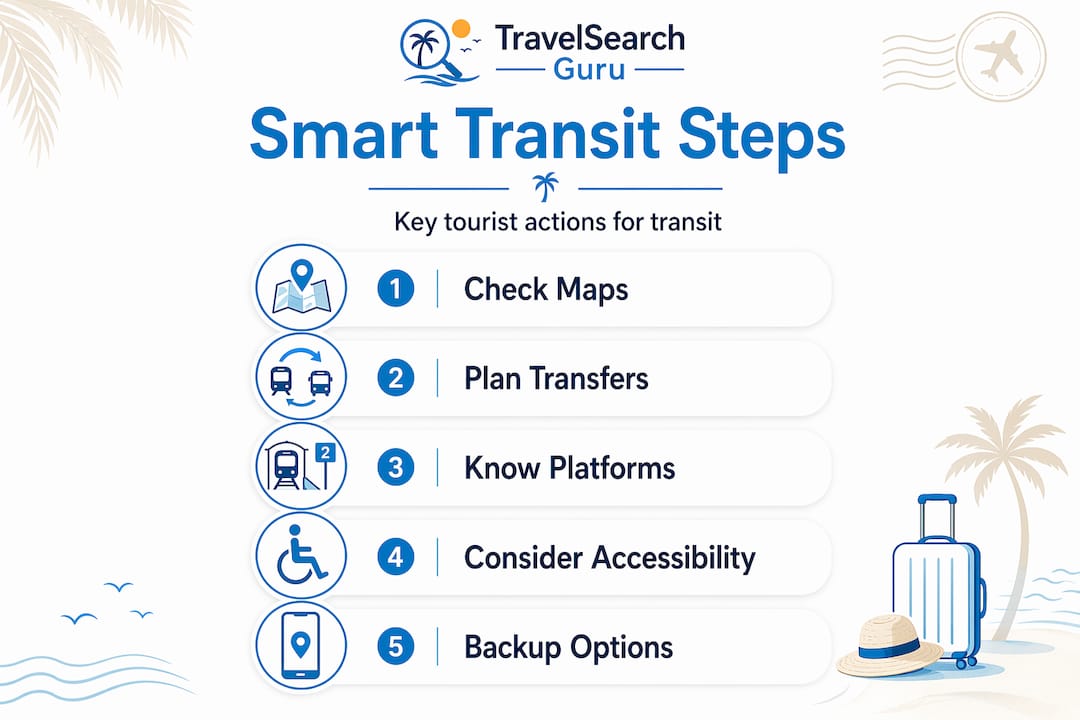
Understanding local transit means knowing which factors to evaluate before you commit to a route or a mode of travel. Not all of them are obvious.
Trip duration, comfort, safety, and expense are the heaviest weights in how passengers, including tourists, choose between transport options. But those four attributes interact with each other in ways that matter. A cheaper option that takes twice as long may cost you more in lost time than the price difference saves. A comfortable option that runs infrequently is useless if you need to catch a connection.
Here is what to assess when planning your routes:
- Frequency and punctuality. Punctuality and frequency are among the strongest predictors of satisfaction with public transit. A bus that runs every 30 minutes gives you no margin for error. A metro that runs every 5 minutes gives you flexibility.
- Transfer logic. Knowing where to change lines, how long transfers take, and which connections are reliable is more valuable than memorizing every stop on the map. Understanding transfer logic reduces stress and improves satisfaction more than any other single piece of knowledge.
- Safety and comfort. These vary significantly by city and by time of day. Research the specific lines you plan to use, not just the general reputation of the system.
- Cost and payment systems. Many cities use tap cards, apps, or zone-based pricing that confuses first-time visitors. Knowing this in advance prevents the frustrating experience of being stuck at a turnstile.
- Accessibility options. If you travel with children, luggage, or have any mobility constraints, accessibility planning is essential for reducing stress and keeping all options open.
Pro Tip: Do not just plan the route. Plan the transfer. Knowing which platform to walk to at a busy interchange, and how long it realistically takes, prevents the single most common cause of missed connections for tourists.
The significance of local transport knowledge also extends to multimodal thinking. Most destinations require combining more than one type of transit, such as a metro to a bus to a short walk. Improved accessibility and multimodal transit reduce trip friction and allow fuller participation at destinations. Tourists who plan only one leg of the journey often get stranded at the second.
What happens without this knowledge
The consequences of arriving unprepared are not just minor inconveniences. They compound.
- You miss attractions entirely. Without knowing which transit lines serve which areas, you may never reach parts of the city that were on your list. Lack of accessible infrastructure prevents participation, and this is especially acute for travelers with disabilities or mobility limitations.
- You lose hours to confusion. Fragmented information, unclear signage, and unfamiliar payment systems eat time. South Korea’s government is actively working to address exactly this problem. Regional transport inconveniences for foreign tourists caused by scattered information and fragmented reservation systems are significant enough that multiple ministries are coordinating to fix them. If a country with excellent infrastructure still has this problem, imagine less transit-friendly destinations.
- Your stress levels spike. This is not just unpleasant. It actively reduces how much you enjoy the trip. The cognitive load of solving transit problems in real time pulls attention away from the experience itself.
- You overpay. Tourists who do not understand local transit default to taxis and rideshares for every trip. In many cities, that multiplies your transport costs by a factor of three or four compared to using local transit correctly.
- You limit your spontaneity. Counterintuitively, preparation creates freedom. When you understand the system, you can decide on a whim to extend your day in one neighborhood, hop to another, or catch a late ferry. Without that knowledge, every unplanned move becomes a logistical problem.
Practical strategies for mastering local transit
Preparation does not mean spending hours studying transit maps. It means knowing the right things before you need them.
- Download the right apps before you land. Most major cities have official transit apps with real-time data. Google Maps works well for basic routing, but local apps often include fare information, platform details, and service alerts that Google misses.
- Identify your key transfer points. You do not need to memorize the whole system. Find the two or three interchange stations or stops that connect the areas you plan to visit. Learn those well.
- Check payment options in advance. Does the city use a tap card you can load at the airport? A mobile payment system? Cash only on certain lines? Knowing this before you arrive means you are not problem-solving at the gate.
- Plan routes that minimize walking with heavy luggage. Tourists optimize under real constraints like comfort and service frequency, not just distance. A route with one transfer and no stairs beats a shorter route with three staircase changes when you are carrying a suitcase.
- Research accessibility early if you need it. Accessibility constraints must be considered early, because inaccessible stops can block participation even when an attraction is physically close. Do not assume a nearby stop is a usable stop.
- Build buffer time into your first transit day. Your first experience with a new system always takes longer than expected. Give yourself room to make a wrong turn without it ruining the schedule.
Pro Tip: Screenshot your key routes with offline maps before you leave your accommodation each morning. Data connections fail in tunnels, basements, and rural areas. A saved screenshot costs nothing and saves significant stress.
When you are arriving at a new destination, the very first transit decision sets the tone for everything that follows. Booking a reliable airport transfer service in advance removes that first layer of uncertainty entirely, so you start the trip with confidence rather than confusion.
My take on what transport knowledge really changes
I have seen travelers spend months planning a trip and then completely unravel in the first two hours because they had no idea how to get from the airport to their hotel. The itinerary was perfect. The accommodation was excellent. But the transit gap turned a confident traveler into an anxious one, and that anxiety colored the first full day.
What I have learned from watching this happen repeatedly is that most travelers underestimate transport not because they are careless, but because they assume it will sort itself out. It usually does, eventually. But “eventually” costs time, money, and emotional energy you cannot recover.
The uncomfortable truth is this: ignoring transport logistics does not just create inconvenience. It limits what you actually get to do. Learning transport systems improves actual participation, not just passive visiting. The tourist who understands the local metro reaches neighborhoods that the taxi-dependent tourist never sees. That is a real difference in the quality of the trip.
I also think the inclusivity angle is underappreciated. Mobility constraints, whether from disability, age, or traveling with young children, make transport knowledge even more critical. The gap between a well-planned accessible route and an improvised one is not just comfort. It is whether certain travelers get to participate at all.
My advice: spend 30 minutes on transit research for every destination you visit. That investment pays back in hours of saved time, lower costs, and a trip that feels like it was designed for you.
— Alexander
Plan smarter with Travelsearch Guru

TravelSearch Guru takes the guesswork out of the parts of travel that most platforms ignore. Beyond finding great deals on hotels and flights, the platform connects you with pre-arranged airport to hotel transfers and curated excursions that factor in local transport logistics from the start. Whether you are heading to the Dominican Republic or exploring a new city, TravelSearch Guru matches you with options that fit your schedule, comfort needs, and budget. Use the travel assessment tool to evaluate your trip plan and identify transport gaps before they become problems on the ground. Start your next trip already knowing how it all connects.
FAQ
Why does local transport knowledge affect tourist satisfaction?
Transport is not just logistics. Research shows that transport perception directly predicts anxiety and psychological distress, meaning a stressful transit experience reduces overall trip satisfaction even when other elements go well.
What are the most important transit factors for tourists to research?
Punctuality, frequency, and transfer logic matter more than most tourists realize. These three factors determine whether you make connections reliably and whether the system fits your itinerary.
How does transport knowledge help tourists save money?
Tourists without local transit knowledge default to taxis and rideshares for every trip, which can cost three to four times more than using local public transit correctly. Understanding the system opens up affordable options that are often faster during peak hours.
What should tourists with mobility needs know about local transport?
Accessibility constraints must be researched before arrival. An inaccessible stop can block participation even when an attraction is nearby, so checking elevator availability, step-free access, and accessible route options in advance is not optional for travelers with mobility needs.
How can tourists prepare for unfamiliar transit systems?
Download the local transit app before landing, identify your key transfer points, confirm payment methods in advance, and build extra time into your first day. These steps remove the most common sources of confusion without requiring deep knowledge of the entire network.