
For a typical Cancun visitor, the single best move is to book a curated small-group guided excursion along the Ruta de los Cenotes through TravelSearch Guru. You get certified guides, round-trip transfers from the Hotel Zone, included safety gear, and adventure activities like rappelling, ziplines, and cave snorkeling, all in one reservation. Most shared small-group tours run modest rates per person for a half-day, or a higher cost for a full day with ruins or multiple sites. The drive from Cancun’s Hotel Zone to the Ruta de los Cenotes corridor near Puerto Morelos takes about forty minutes to an hour, so a half-day tour is genuinely doable without sacrificing a full beach afternoon.
- Small groups (typically 8–12 people) mean faster entry, more guide attention, and better photos
- Certified guides are non-negotiable for cave and cavern sections where navigation matters
- Included transfers from resorts like Hyatt Ziva Cancun or Moon Palace eliminate the self-drive guesswork
- Adventure options on most curated tours: assisted rappel, zipline over the cenote, cliff jumps, snorkeling, and cave swims
- Duration: half-day tours run 4–5 hours; full-day tours with a ruins add-on run 8–10 hours
Entry fees at individual cenotes typically range from 100–400 MXN per person, often payable in cash at the gate, and are sometimes bundled into guided tour pricing.
Key Takeaways
Guided small-group cenote excursions from Cancun are best booked in advance with a certified operator that includes Hotel Zone transfers, equipment, and a clear cancellation policy.
| Point | Details |
|---|---|
| Best booking path | Curated small-group tours via TravelSearch Guru include transfers, guides, and gear in one reservation. |
| Price range | Shared half-day tours run $45–$110 USD; full-day tours with multiple cenotes run $90–$160 USD per person. |
| Sunscreen rule | Quintana Roo restricts chemical sunscreens; pack zinc oxide or titanium dioxide mineral sunscreen only. |
| Book early | High season (December–April, July–August) and Semana Santa fill fast; book two to four weeks ahead. |
| Protect the water | Shower before every entry, skip chemical products, and choose operators who enforce conservation rules. |
Table of Contents
- What does a Cancun cenote excursion actually include?
- How long do tours take, and what do they cost?
- What types of cenotes will you swim in?
- What adventure activities can you expect on a guided excursion?
- Who are these excursions best for, and what are the safety basics?
- Pickup logistics, what to bring, and how to book
- How visitor behavior affects cenote water quality
- Why TravelSearch Guru is the low-friction way to book your cenote day
- Our team’s take on what makes a cenote day worth it
- Sources
What does a Cancun cenote excursion actually include?
Standard inclusions on a reputable guided tour cover round-trip hotel-zone transfer, a certified bilingual guide, entrance fees to the cenotes on the itinerary, life jackets, snorkeling gear (mask and fins), and a safety briefing before any water entry. Most operators also carry basic first aid and require participants to sign a waiver before departure.
What is often not included: lunch or snacks, lockers (usually 20–50 MXN extra), towel rental, professional underwater photos, and any optional add-on activities beyond the core package. Some tours bundle a light lunch or a stop at a local taqueria, but confirm this before you book.
Before you confirm any reservation, ask these questions:
- What is the maximum group size per guide?
- Are guides certified in first aid and cave navigation?
- What is the cancellation policy, and is there a minimum participant count?
- Which specific cenotes are on the itinerary, and are entrance fees included?
- Where exactly is the pickup point, and what time does the tour depart?
- Is equipment (life jacket, snorkel gear) included or rented separately?
Pro Tip: Ask the operator directly whether pre-entry showers are mandatory at each cenote stop. Reputable guides enforce this rule. If an operator shrugs it off, that tells you something about how they run the rest of the tour.
Quintana Roo restricts chemical sunscreens in cenotes and natural water bodies. Pack mineral sunscreen (zinc oxide or titanium dioxide) before you leave your resort.
How long do tours take, and what do they cost?
Choosing your base matters more than most visitors realize. Cancun sits at the northern end of the Riviera Maya, which means the closest cenote cluster, the Ruta de los Cenotes, is a 40–60 minute drive inland from the Hotel Zone. That transit time shapes every format.
Half-day format (4–5 hours total):
- 7:30–8:00 AM: Hotel pickup
- 9:00–9:30 AM: Arrive at first cenote, safety briefing
- 9:30 AM–12:30 PM: One to two cenotes, activities, swim time
- 1:00–1:30 PM: Return to hotel
Full-day format (8–10 hours total):
- 7:00 AM: Hotel pickup
- 8:30–9:00 AM: First cenote, briefing and activities
- 11:00 AM–1:00 PM: Second or third cenote
- 1:00–2:00 PM: Lunch stop (local restaurant or packed)
- 2:30–5:00 PM: Optional ruins visit (Cobá or Chichén Itzá add-on) or return
- 5:30–6:30 PM: Hotel drop-off
Price ranges by format:
- Shared small-group half-day tours cost a moderate amount per person
- Shared small-group full-day tours covering 2–3 cenotes cost a higher moderate range per person
- Private tour (half-day): $200–$400 USD for the group
- Bundled tours with Chichén Itzá or Cobá ruins included generally cost a higher rate per person
Semana Santa (Holy Week, late March to early April) and the December holiday window drive prices up and availability down fast. Book at least two to three weeks ahead for those periods. Shoulder months like May, September, and October offer better pricing and noticeably thinner crowds at the cenotes themselves.
What types of cenotes will you swim in?
The Yucatán Peninsula’s cenotes fall into four broad types, and most guided excursions from Cancun mix at least two of them on a single day.
Open cenotes are fully exposed to the sky. Think a circular pool of turquoise water ringed by jungle, with sunlight hitting the water directly. These are the most photogenic and the most accessible for families. Cliff jumps and ziplines are common here.
Semi-open cenotes have partial roof coverage, often with a dramatic beam of light cutting through a gap in the rock. The light changes by the hour, so photographers should ask guides what time of day produces the best shaft of light at each specific site.
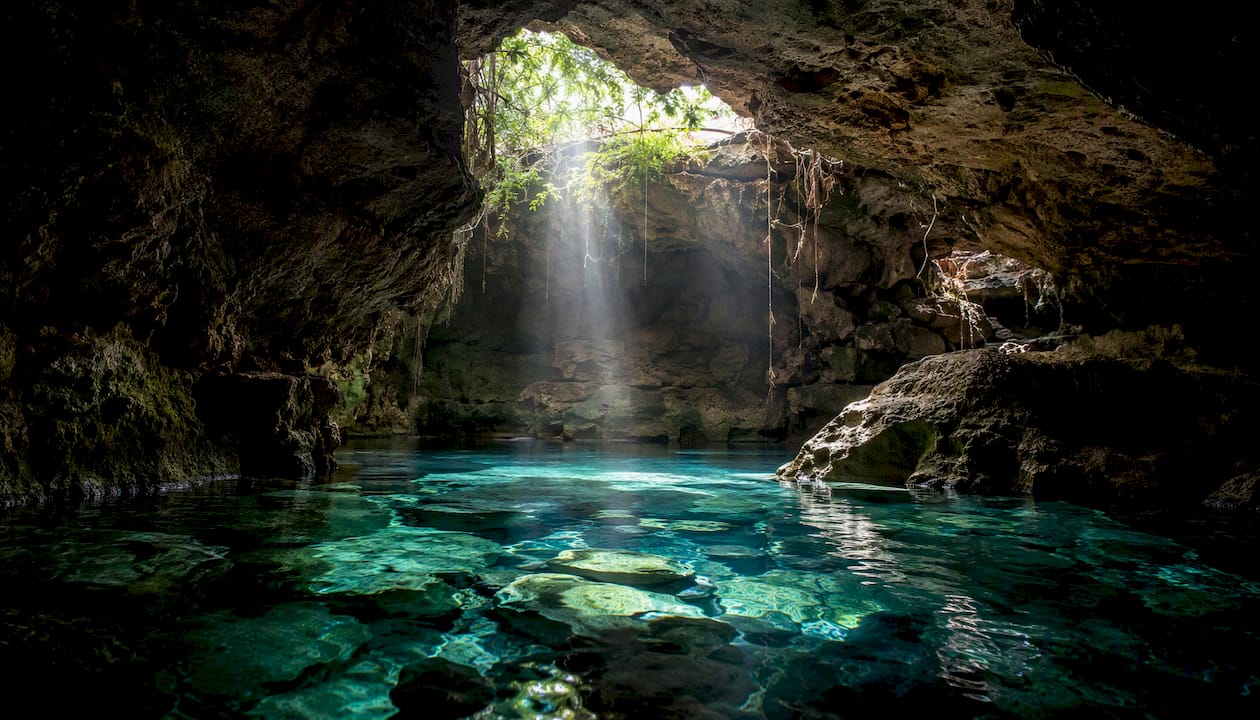
Cavern cenotes sit inside a cave with a small opening. You swim in, and the guide leads you through passages with a headlamp. These require comfort in low-light water and are not suitable for anyone with claustrophobia. Cave snorkeling here is genuinely spectacular.
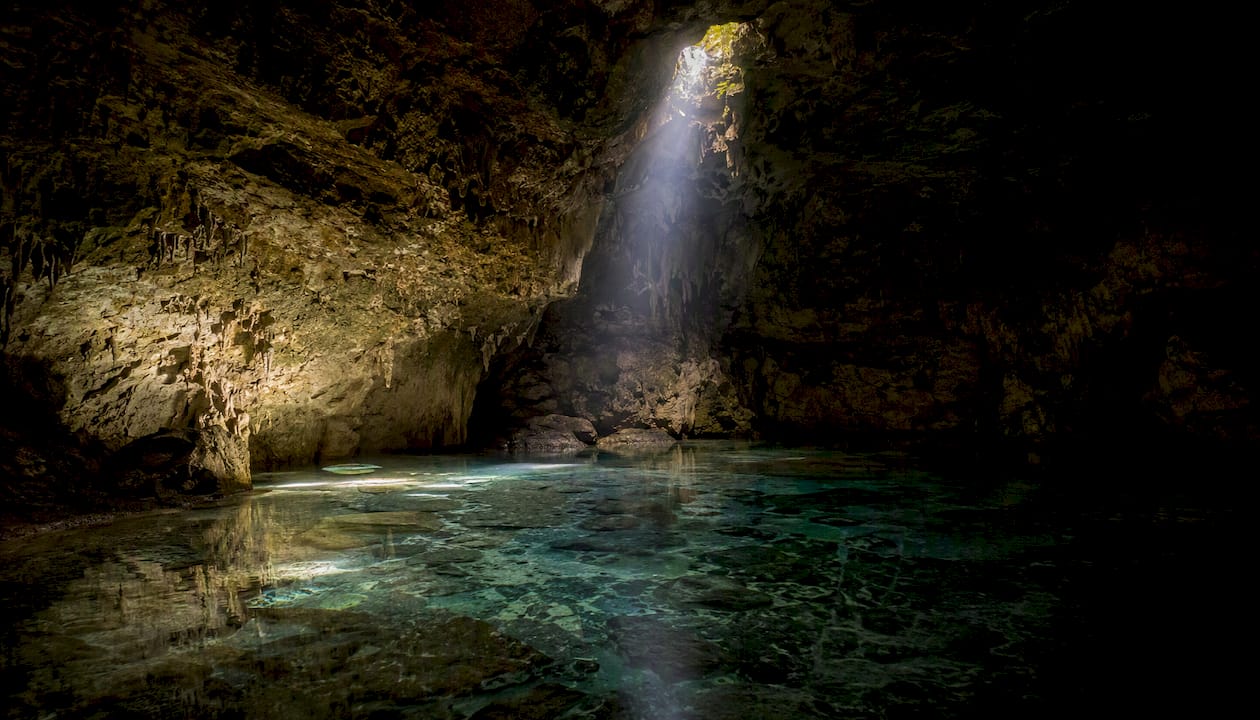
Underground sinkhole cenotes are fully enclosed, accessed by stairs or ladders cut into the rock. Water is often very deep (15–30 meters), crystal clear, and cold. Guided freediving and snorkeling are the main draws.
The Ruta de los Cenotes runs 20–35 km inland from Puerto Morelos and concentrates a mix of all four types within a short drive of each other. It is the closest cenote corridor to Cancun and the most common destination for guided day trips from Hotel Zone resorts.
Pro Tip: For the best underwater photos, visit semi-open and cavern cenotes between 10:00 AM and noon, when natural light angles are strongest. Bring a waterproof phone case or a GoPro. Most cenotes prohibit flash photography near cave formations.
What adventure activities can you expect on a guided excursion?
Most curated cenote tours from Cancun offer a menu of activities rather than a fixed program. Here is what you will typically find, and what to know about each:
- Zipline over the cenote: A cable strung above the open water, usually 5–15 meters high. Operators provide harnesses and a safety check before each run. Weight limits typically apply (commonly 100–120 kg).
- Assisted rappel: You descend a rope into the cenote from a platform above. Guides handle the belay. No prior climbing experience needed, but a fear of heights makes this one harder to enjoy.
- Cliff jumps: Platforms at varying heights (2–8 meters) for those who want something unscripted. Guides assess water depth and clear the landing zone before each jump.
- Snorkeling: Standard in open and semi-open cenotes. Gear is included on most tours.
- Cave snorkeling: Guide-led swim through cavern passages with headlamps. Requires basic swim competency and comfort in enclosed spaces.
- Kayaking: Offered at some larger open cenotes as an add-on, not standard.
Sample half-day itinerary (single cenote, adventure focus):
- 8:00 AM: Hotel pickup from Hotel Zone (Hyatt Ziva, Iberostar, or similar)
- 9:00 AM: Arrive at cenote, safety briefing, gear fitting
- 9:30 AM: Zipline and rappel session
- 10:30 AM: Free swim and snorkeling
- 11:30 AM: Cliff jump option, group photos
- 12:00 PM: Depart for return
- 1:00 PM: Hotel drop-off
Sample full-day itinerary (two cenotes plus ruins):
- 7:00 AM: Hotel pickup
- 8:30 AM: First cenote (open type, zipline and swim)
- 10:30 AM: Second cenote (cavern type, cave snorkel)
- 12:30 PM: Lunch at local restaurant
- 2:00 PM: Cobá ruins visit (optional add-on)
- 5:30 PM: Return to Hotel Zone
Common activity restrictions to confirm before booking:
- Minimum age for zipline and rappel: typically 6–8 years old, varies by operator
- Weight limits for zipline: usually 100–120 kg
- Pregnancy: excluded from all aerial and jump activities
- Heart conditions or recent surgery: consult your doctor and disclose to the operator
- Non-swimmers: life jackets provided, but cave sections may be off-limits
Who are these excursions best for, and what are the safety basics?
Guided cenote excursions suit a wide range of travelers: families with kids aged 8 and up, couples, small friend groups, and solo travelers who want company. Photographers love the light conditions. Active seniors handle most open-cenote tours without difficulty, provided they are comfortable on stairs and ladders.
Travelers with significant mobility limitations should ask specifically about step counts and whether ramps or alternative access exist. Most cenotes involve at least one ladder descent of 10–30 steps, sometimes steep. Very young children (under 5) are welcome at open cenotes for swimming but cannot participate in aerial activities.
Safety measures a reputable operator must provide:
- Certified bilingual guides with first aid training
- Life jackets for all water activities
- Pre-activity safety briefing covering emergency procedures
- First aid kit on-site or in the transport vehicle
- Clear weight and health restrictions communicated before booking
Before you book, run through this checklist:
- Can you swim at least 25 meters unassisted?
- Are you comfortable climbing a 20-step ladder in wet conditions?
- Do you have any heart, respiratory, or joint conditions that affect physical activity?
- Does your travel insurance cover adventure activities (rappel, zipline)?
- Have you disclosed any medical conditions to the operator?
Pro Tip: Travel insurance that covers adventure activities is worth adding before you leave home. Standard policies often exclude rappelling and ziplines. Check your policy wording, not just the summary.
Pickup logistics, what to bring, and how to book
Most Hotel Zone resorts, including Moon Palace, Hyatt Ziva Cancun, and the Iberostar Selection Cancun, are standard pickup points for guided tours. Confirm your exact hotel name and lobby meeting time when you book, since pickup windows can span 30–45 minutes depending on the route.
If you prefer to drive yourself to the Ruta de los Cenotes, parking is available at most privately owned cenotes along the route. That said, navigating local transportation in the Cancun area has its own learning curve, and self-drive removes the convenience of a guided group experience.
What to pack:
- Mineral sunscreen only (zinc oxide or titanium dioxide, no chemical SPF)
- Towel (not always provided)
- Water shoes or sandals with straps
- Change of clothes and a dry bag for your phone
- Cash in pesos for lockers, tips, and any entrance fees not bundled in your tour
- Reusable water bottle
- Light snack if it is a full-day tour without a meal included
Booking checklist:
- Confirm group size cap (aim for 12 or fewer per guide)
- Verify guide certification and first aid training
- Read the cancellation policy: look for free cancellation up to 24–48 hours before departure
- Confirm whether entrance fees are included or paid separately at the gate
- Get the exact pickup time and hotel meeting point in writing
- Ask about minimum participant numbers (some tours cancel if fewer than 4 people book)
High season runs December through April and again in July and August. Book at least two weeks ahead during those windows. For Semana Santa, three to four weeks is safer.
How visitor behavior affects cenote water quality
The science here is specific and worth knowing. A 2019 sampling study measured water quality in four tourist cenotes before and during Holy Week and found significant changes in water-quality indicators during high-visitation periods, with correlations between visitor counts and at least one fecal-matter indicator in each sampled cenote. Some sites exceeded US EPA recreational benchmarks during peak days. That is a single study with a limited sample, but the direction of the finding is consistent with what researchers recommend: visitor-management measures work, signage alone does not.
The UNDP best-practice guide for cenote conservation recommends pre-entry showers, visitor-number controls, no-chemical-product policies, and community-focused infrastructure as the core protection measures. The Cenoteando project, validated by UNAM and partner NGOs, reinforces these practices with specialist-reviewed guidance on structural conservation and responsible access.
Cenotes connect to the Yucatán’s underground river system. What goes into one cenote does not stay there.
Rules every visitor should follow:
- Shower before entering the water, every time, at every cenote
- Use only mineral or biodegradable sunscreen (zinc oxide or titanium dioxide)
- No insect repellent, soaps, or lotions before entry
- Do not touch cave formations, stalactites, or wildlife
- Follow guide instructions on where to swim and where not to
Pro Tip: If a cenote operator does not enforce the pre-entry shower rule or allows chemical sunscreen, ask to speak with management. If the rule is still ignored, leave. Your entry fee is not worth contributing to measurable water-quality damage in a fragile ecosystem. Operators who skip enforcement tend to cut corners elsewhere too.
Why TravelSearch Guru is the low-friction way to book your cenote day
Booking a cenote excursion from Cancun through TravelSearch Guru means one reservation covers your Hotel Zone pickup, certified guide, equipment, and entrance fees, with clear cancellation terms upfront. No hunting for individual operators, no language-barrier negotiations at the gate, and no surprise cash demands on arrival.

Our team curates small-group adventure excursions along the Ruta de los Cenotes and other top cenote corridors, with group sizes kept small enough that your guide actually knows your name by the second cenote. We also bundle airport transfers with excursion packages for travelers who want everything handled from the moment they land. Families, couples, and active groups all find options that fit their pace and comfort level. Browse available cenote excursions and adventure tours on the TravelSearch Guru platform and check availability for your travel dates.
Our team’s take on what makes a cenote day worth it
We have seen the difference a small group makes firsthand. When you are one of eight people rather than one of forty, the guide has time to point out the blind shrimp living in the cave walls, position you for the best light shaft photo, and actually answer your questions between jumps. That is the experience we build our Cancun excursion recommendations around.
Our team consistently steers guests at resorts like Moon Palace and Hyatt Ziva Cancun toward morning departures on the Ruta de los Cenotes, arriving at the first cenote before the tour buses from Playa del Carmen pull in. The water is clearer, the light is better, and the experience is quieter. If you are ready to lock in your dates, start with a travel assessment and we will match you to the right format, half-day or full-day, adventure or family-paced.
Sources
The sources below back the responsible-tourism guidance and practical logistics in this article. Use the UNDP and Cenoteando guides for conservation rules; use the travel guides for itinerary and logistics planning.
- Guía de buenas prácticas para la conservación y buen uso de los cenotes y sus cuevas en la Península de Yucatán
- Study on water quality variation in tourist cenotes of the Yucatán Peninsula
- Guía de Buenas Prácticas para la conservación y uso de los cenotes y sus cuevas de la Península de Yucatán: Conservación de la estructura
- Mexico Cenotes Guide 2026: Types, Safety & How to Visit
- Cenotes Near Cancun, Playa and Tulum: What to Know Before You Go