
Family travel booking is the coordinated process of securing flights, accommodations, and activities tailored to the needs of children and adults traveling together. The best practices for family travel booking center on one principle: lock in the essentials early, then keep everything else flexible. Families heading to Caribbean and Mexico resorts face a specific set of challenges, from passport lead times to peak school break pricing, that make structured planning non-negotiable. TravelSearch Guru connects families to curated resort experiences in destinations like the Dominican Republic and the Riviera Maya, making the planning process far less overwhelming than going it alone.
1. How far in advance should families book travel?
Booking timelines are the foundation of every solid family travel planning guide. Domestic trips require at least 12 weeks of lead time, while international trips to Caribbean and Mexico resorts need 3–6 months of advance planning. That gap exists for a reason: international travel adds passport processing, visa checks, and resort availability windows that simply cannot be rushed.
Flights are the first thing to book. Domestic flights booked 1–3 months out generally deliver the best value, and international flights booked 3–6 months ahead follow the same logic. Seat inventory for families traveling together shrinks fast, especially during school breaks in june, july, and december.
Passport processing takes 4–6 weeks under routine conditions. That means families planning a trip to Punta Cana or Cancún should verify every passport’s expiration date at least six months before departure. A passport expiring within six months of your return date is rejected at many Caribbean and Mexico entry points.
Pro Tip: Set a fare alert for your target route the moment you decide on a destination. Flight prices fluctuate with demand and season, and no guaranteed cheapest booking day exists. Alerts remove the guesswork.
| Booking Element | Recommended Lead Time |
|---|---|
| International flights | 3–6 months |
| Domestic flights | 1–3 months |
| Resort accommodations | 3–5 months |
| Airport transfers | 4–8 weeks |
| Day tours and excursions | 2–4 weeks |
2. What to lock in first when booking family vacations
The single most important rule in booking family vacations is to separate non-negotiables from optional items. Locking in flights and primary lodging early is critical. Everything else, including day tours, beach excursions, and restaurant reservations, should stay flexible until you are closer to the travel date.
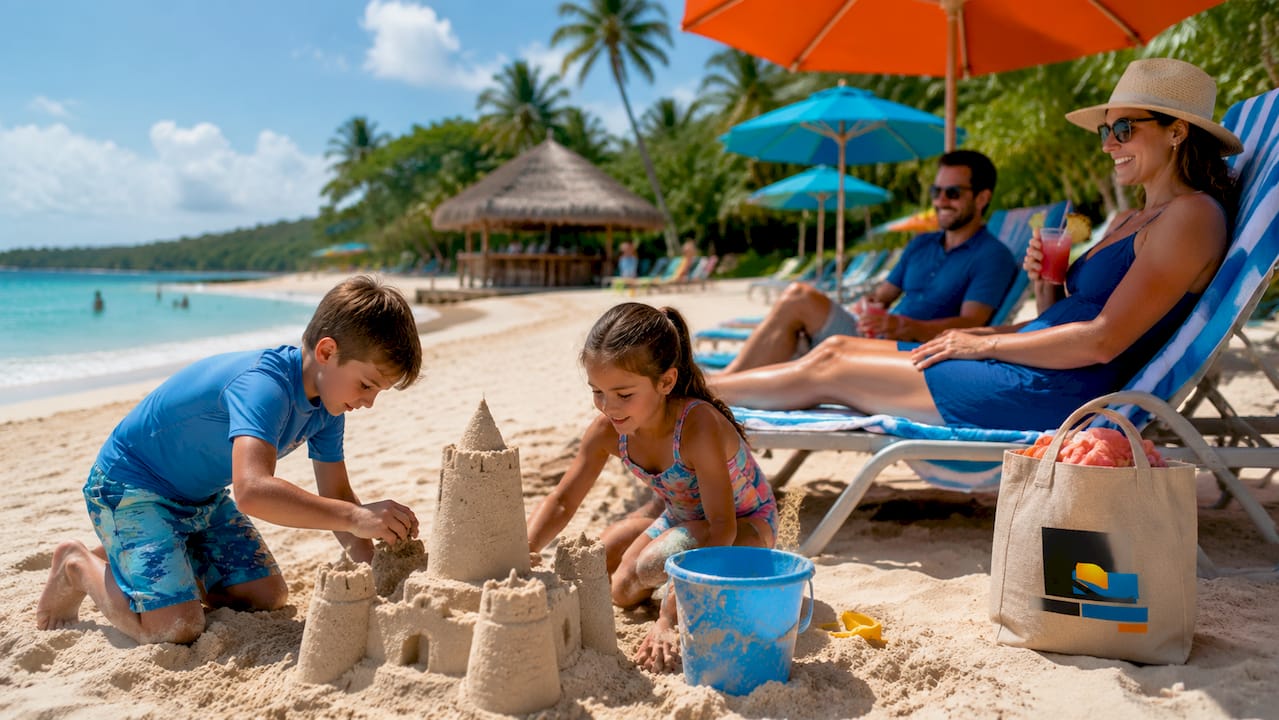
This approach works because family schedules shift. A child’s energy level on day three of a Riviera Maya resort stay may look nothing like you planned at home. Keeping activities loosely scheduled lets you adapt without losing money on cancellation fees.
Here is a practical booking priority order for Caribbean and Mexico trips:
- Flights: Book first. Seat availability for groups of four or more disappears quickly.
- Primary resort or hotel: Lock in your room type and confirm the cancellation policy before paying.
- Airport transfers: Pre-book to avoid inflated on-arrival pricing at Cancún or Punta Cana airports. TravelSearch Guru offers reliable airport transfers for families arriving at major Caribbean and Mexico hubs.
- Must-do excursions: Pre-booking popular activities like Saona Island day trips or Chichen Itza tours avoids sold-out disappointment. Learn why pre-booking excursions pays off before you travel.
- Flexible activities: Leave these open. Book 1–2 weeks before travel based on weather and energy.
Pro Tip: Always read the cancellation policy before confirming any booking. For Caribbean and Mexico resorts, free cancellation windows of 48–72 hours are standard. Anything shorter is a red flag for a family trip.
3. How to coordinate and communicate travel details as a family
Family trip coordination fails most often at the information management stage, not the booking stage. A centralized digital hub sharing reservations, contacts, and itineraries prevents the chaos of searching through email threads at midnight in a foreign city. A shared Google Doc or a family folder in a notes app works well for this purpose.
The hub should include every confirmation number, the resort’s address, local emergency contacts, and a day-by-day outline. Families often underestimate how much this matters until they need a hotel address quickly and cannot find it. One shared document solves that problem entirely.
Assign one primary planner to own the document and keep it updated. Other family members can contribute, but one person should have final responsibility for accuracy. This prevents duplicate bookings and missed deadlines for refund windows.
- Store all confirmation numbers in one place, labeled by date and vendor.
- Save the resort’s GPS coordinates in a mapping app before you leave home.
- Set calendar reminders for final payment deadlines and cancellation cutoff dates.
- Share the document with every adult traveling, including grandparents if applicable.
Pro Tip: Screenshot every confirmation page and save it to a phone photo album labeled “Trip Docs.” Cell service in parts of the Caribbean and Mexico can be unreliable, and offline access to your documents is worth the two minutes it takes to set up.
The TravelSearch Guru team builds family group itineraries that consolidate transfers, excursions, and resort logistics into one manageable plan. That kind of coordination removes the burden from the primary planner entirely.
4. Smart packing and travel day strategies for families
Minimalist packing is the most underrated family travel tip. Overpacking complicates travel days consistently, and most necessities are available locally at Caribbean and Mexico resort towns. Packing a smaller bag per person reduces check-in time, baggage fees, and the physical strain of moving through airports with children.
Involve kids in packing their own bags. Children who pack their own backpack take ownership of their belongings and are far less likely to forget items that matter to them. Keep a shared family checklist for documents, medications, and electronics, but let each child manage their personal items.
Travel day itself needs buffer time built in. Overscheduling is the most common mistake in family trip planning. Experts recommend limiting activities to 1–2 per day and building at least 20% buffer time for rest, meals, and unexpected delays. On travel day specifically, arrive at the airport with more time than you think you need.
- Pack one carry-on per child with snacks, a tablet or book, and a change of clothes.
- Place all travel documents in one adult’s bag, not split between multiple people.
- Book direct flights when possible, especially for trips under four hours with young children.
- Confirm your airport transfer pickup time the night before departure.
- Plan a low-key first day at the resort. Arrival days are not activity days.
Pro Tip: Direct flights reduce travel fatigue significantly for young children. The extra cost of a nonstop flight to Cancún or Santo Domingo often pays for itself in mood and energy on day one.
5. How to balance budget and quality when booking Caribbean and Mexico resorts
Setting a realistic budget is the first step in any family travel planning guide worth following. Add 15% padding to your total budget for unexpected expenses. That buffer covers a last-minute excursion, a medical co-pay, or a meal outside the resort when everyone needs a change of scenery.
Families traveling to Caribbean and Mexico destinations have three main lodging categories to evaluate:
- All-inclusive resorts: Best for families who want predictable costs. Meals, drinks, and many activities are included. Resorts like those in Punta Cana and Los Cabos offer dedicated kids’ clubs and family pools.
- Suite-style hotels: Ideal for families needing two bedrooms or a kitchenette. These reduce meal costs and give children a separate sleeping space.
- Vacation rentals: Work well for larger families or multi-generational groups. Cooking some meals saves money, but you lose resort amenities and on-site kids’ programming.
Bundled family passes for local attractions reduce per-person costs at popular sites. At many Mexico resorts, packages that combine airport transfers, excursions, and resort stays deliver better value than booking each element separately. The off-resort excursion options in the Caribbean and Mexico are worth budgeting for specifically.
| Lodging Type | Best For | Typical Cost Range |
|---|---|---|
| All-inclusive resort | Predictable family budgets | $$$ |
| Suite-style hotel | Families needing extra space | $$ |
| Vacation rental | Large or multi-generational groups | $$–$$$ |
Key Takeaways
The most effective approach to family travel booking combines early commitment on flights and lodging with deliberate flexibility on activities, supported by a centralized information system that every adult can access.
| Point | Details |
|---|---|
| Book flights and lodging first | International trips need 3–6 months lead time; domestic trips need at least 12 weeks. |
| Keep activities flexible | Lock in must-do excursions early, but leave daily activities open until 1–2 weeks before travel. |
| Centralize all travel information | One shared digital document with confirmations, contacts, and addresses prevents on-trip chaos. |
| Build budget padding | Add 15% to your total budget to cover unexpected costs without stress. |
| Limit daily activities | Cap plans at 1–2 main activities per day and build in rest time to avoid burnout. |
What we’ve learned from years of family travel planning
The conventional wisdom says to plan your destination first, then fit your family around it. Our team has found the opposite works better. Start from your family’s constraints, including travel dates, the ages of your children, and realistic energy levels, and then choose a destination that fits. A five-year-old does not need a packed cultural itinerary. A beach resort in the Dominican Republic with a kids’ club and a pool is often the perfect answer.
The shift toward slow travel has changed how we approach itinerary building. Experienced family travelers consistently report higher satisfaction when their itineraries include breathing room. Two hours at a Riviera Maya cenote beats four rushed stops in a single day, every time. The memories that stick are rarely the ones that required the most logistics.
Digital tools have made the coordination side of family travel genuinely manageable. A shared document, a mapping app with saved locations, and pre-booked transfers remove the three biggest sources of on-trip stress. What remains is the actual experience. That is where the focus belongs.
One practice our team recommends without exception: have each family member choose one non-negotiable activity. When everyone has something they personally chose, the trip feels fair and the conflicts drop sharply. It also forces the itinerary to stay lean, because you can only fit so many non-negotiables in a week.
The families who enjoy their Caribbean and Mexico trips most are not the ones who planned the most. They are the ones who planned the right things and left room for everything else.
— Our Team at TravelSeach Guru
How TravelSearch Guru supports family travel to Caribbean and Mexico resorts
Families planning trips to the Caribbean and Mexico have a lot of moving parts to manage. TravelSearch Guru connects families directly to curated resort experiences, pre-vetted excursions, and reliable transfers across top destinations including Punta Cana, Cancún, and Los Cabos.

Our team handles the logistics that eat up planning time: airport transfers from arrival to resort, family-friendly excursion searches, and full itinerary coordination. Families arrive knowing every detail is confirmed. From a private trip to Saona Island to a guided cenote tour in the Yucatán, TravelSearch Guru matches families to experiences that fit their pace and budget. Start with a travel assessment to see which Caribbean or Mexico destinations align with your family’s needs.
FAQ
How far in advance should families book international trips?
Families should book international trips 3–6 months in advance. This timeline covers flight inventory, resort availability, and passport processing, which takes 4–6 weeks under routine conditions.
What should families book first when planning a vacation?
Flights and primary accommodations should be booked first. These have the most limited availability and the greatest impact on overall trip cost.
How can families avoid overspending on Caribbean and Mexico trips?
Set a total budget and add 15% as a buffer for unexpected costs. All-inclusive resorts and bundled excursion packages reduce variable spending and make costs more predictable.
What is the best way to keep family travel information organized?
Create one shared digital document with all confirmation numbers, resort addresses, and emergency contacts. Every adult traveler should have offline access to this document before departure.
How many activities should families plan per day on vacation?
Limit plans to 1–2 main activities per day and build in at least 20% buffer time for rest and meals. Overscheduling is the most common cause of burnout on family trips.