
A localized travel experience is defined as active, meaningful engagement with a destination’s real culture, daily life, and community rather than passive observation of its tourist attractions. This concept goes by several names in the travel industry: immersive travel, hyper-local travel, and community-based travel all describe the same core shift in mindset. Research from Skift and Qiddiya City shows that 86% of travelers now prioritize immersive and local-style experiences over traditional sightseeing. That number signals a fundamental change in what travelers want from their time abroad, including at Caribbean and Mexico resorts where the gap between resort life and local life can feel especially wide.
What is a localized travel experience, exactly?
A localized travel experience places you inside a destination’s daily rhythm rather than outside it looking in. You eat where residents eat, move how they move, and participate in the rituals that give a place its character. Authentic local experiences emphasize participation in daily life activities like cooking, local customs, and engaging with residents, which distinguishes this style of travel from sightseeing-focused tourism.
The industry term most widely used by travel professionals is immersive travel. The phrase “localized travel experience” captures the same idea with a sharper focus on place and community. Both terms describe a traveler who chooses the neighborhood market over the hotel buffet, the local bus over the resort shuttle, and a conversation with a fisherman over a guided photo stop.
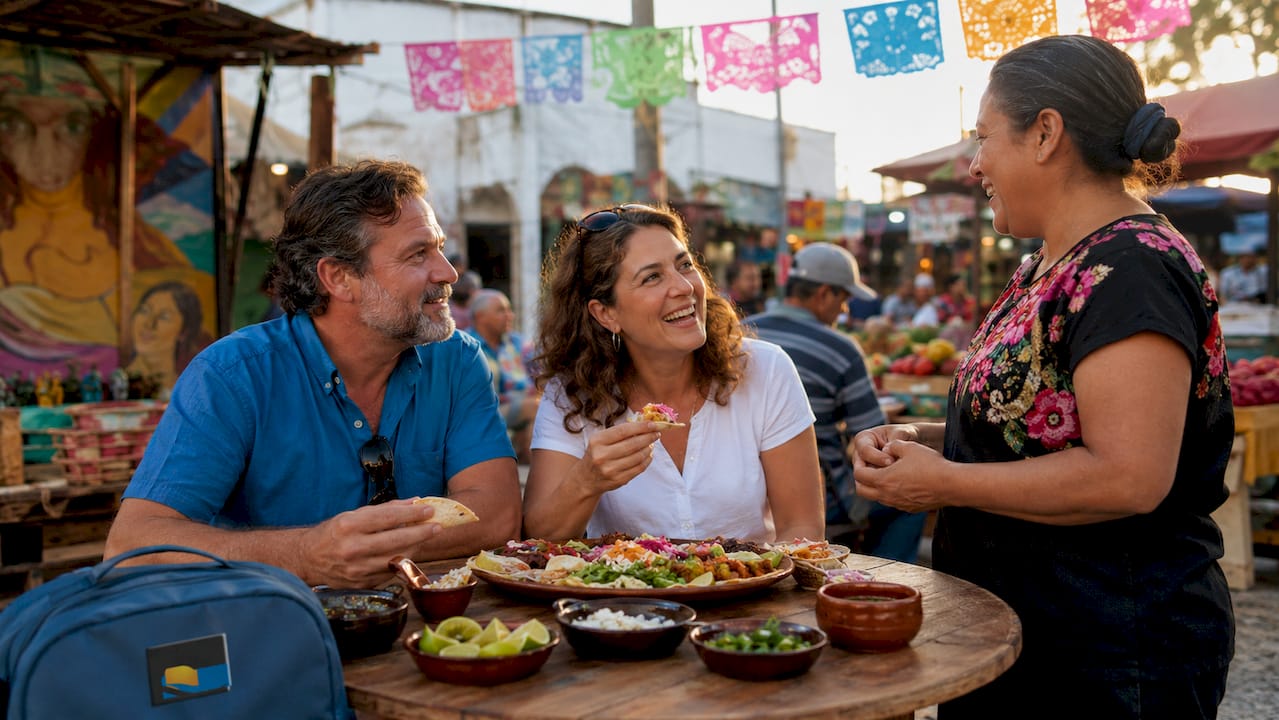
In the Caribbean and Mexico, this distinction is vivid. A traveler staying at a resort in Punta Cana or Los Cabos can spend an entire week without encountering a single Dominican or Mexican resident in a genuine context. A localized approach changes that completely. It means stepping off the resort grounds, visiting a colmado in the Dominican Republic, or joining a family-run cooking class in Oaxaca.
Localized travel transforms tourists into participants through reciprocal cultural exchanges, not just observers. That shift from observer to participant is the defining characteristic of the entire concept.
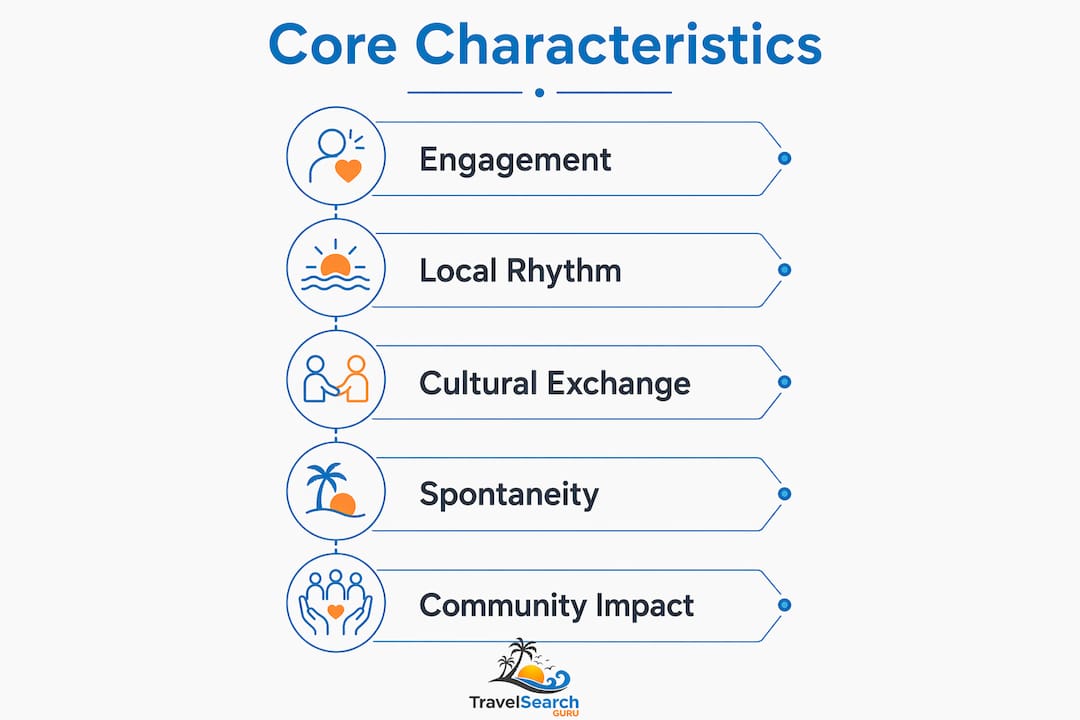
What are the core characteristics of localized travel?
Localized travel has specific, recognizable features that separate it from conventional tourism. These are not vague ideals. They are practical behaviors that shape every day of a trip.
- Active participation over passive observation. You join a cooking class in a local home rather than watching a resort chef demonstrate recipes. You attend a community festival rather than reading about it in a hotel brochure.
- Engagement with local people. Conversations with residents, shopkeepers, and guides who live in the destination year-round provide context that no tour script can replicate.
- Culinary immersion. Eating regional food at family-owned restaurants, street stalls, and markets connects you to local identity in a direct, sensory way. In Mexico, that means tacos al pastor from a neighborhood taqueria, not a resort’s “Mexican night.”
- Slower pace. Slower travel enables curiosity and presence, turning even overlooked moments into memorable local discovery. Rushing through a checklist of attractions produces the opposite effect.
- Local transportation. Using local transport rather than cars in compact destinations increases chances for spontaneous local interaction and eases logistics. In Caribbean towns, that might mean a shared motoconcho ride or a public guagua bus.
- Neighborhood exploration. Walking through residential streets, visiting local pharmacies, and browsing hardware stores gives you a ground-level view of how people actually live.
Pro Tip: Before your trip, identify one neighborhood in your destination that tourists rarely visit. Plan at least half a day there with no fixed agenda. The most memorable moments in localized travel happen in the unplanned spaces between activities.
Meaningful local travel moments often happen in unplanned spaces between activities, encouraging spontaneous interaction. Leaving room in your itinerary is not laziness. It is the strategy.
What are the benefits of localized travel for travelers and communities?
The benefits of local travel operate on two levels simultaneously: personal growth for the traveler and economic health for the destination.
- Deeper cultural understanding. Spending time with residents and participating in their routines builds empathy and context that no museum exhibit can provide. Travelers return home with a more accurate picture of the world.
- Stronger emotional memories. Experiences tied to human connection and sensory engagement are remembered far longer than visits to famous landmarks. The afternoon you spent learning to make jerk chicken from a Jamaican grandmother will outlast any photo of a waterfall.
- Support for small businesses. Hyper-local travel shifts money and attention toward small businesses and family-owned shops, which benefit communities and support sustainable tourism. Every meal at a local restaurant and every purchase from a neighborhood artisan keeps money circulating within the community.
- Reduced pressure from mass tourism. When travelers spread their spending across local businesses rather than concentrating it in large resort complexes, the environmental and social strain on popular destinations decreases.
- Personal growth and confidence. Navigating an unfamiliar neighborhood, communicating across a language barrier, and adapting to local customs builds resilience and self-awareness that stays with you long after the trip ends.
“Creating more meaning rather than more activities leads to authentic visitor immersion.” — Destination BC
In the Caribbean and Mexico specifically, the community benefits are concrete. Resorts in Riviera Maya, Cancun, and Punta Cana generate significant revenue, but much of it stays within large hospitality corporations. Travelers who venture into local towns and spend at independent businesses directly support the families who have lived in those communities for generations. Local travel experts play a critical role in directing that spending to where it matters most.
How can travelers find authentic local experiences on their trips?
Finding genuine local experiences requires intention, not luck. The following approaches work consistently across Caribbean and Mexico destinations.
- Choose locally owned accommodations when possible. Boutique guesthouses and family-run bed-and-breakfasts in towns like Las Terrenas in the Dominican Republic or Sayulita in Mexico put you in direct contact with residents from the moment you arrive.
- Eat where locals eat. Look for restaurants with handwritten menus, plastic chairs, and no English signage out front. These are reliable indicators of authenticity. Avoid restaurants positioned directly outside major tourist attractions.
- Use public and local transportation. Skipping car rentals in dense historic areas and using public transit facilitates organic local encounters and reduces travel stress. Understanding local transportation options before you arrive makes this far easier to execute.
- Attend community events and markets. Weekly markets in Mexican towns like Tlacolula or Oaxaca city draw local vendors, not tourist vendors. The difference in quality, price, and authenticity is immediate.
- Book experiences through local guides. Apps and platforms connecting travelers with local hosts and guides facilitate finding authentic local experiences beyond tourist traps. These platforms enable travelers to book local cooking classes, walking tours, and other immersive activities directly with community members.
- Slow your itinerary down. Resist the urge to plan every hour. Build in mornings with no agenda. Sit at a café and watch the neighborhood wake up.
Pro Tip: Ask your hotel’s housekeeping or kitchen staff where they eat lunch. Staff recommendations consistently lead to the best local food at the most honest prices. This works in Cancun, Cartagena, and everywhere in between.
Immersion occurs when visitors engage their senses in everyday rituals such as neighborhood cafés or community events, adding meaning beyond activities. The goal is not to collect experiences. It is to be present inside them.
Localized travel vs. traditional sightseeing: how do they compare?
The difference between localized travel and traditional sightseeing is not about the places you visit. It is about how you engage with them. A traveler can visit the same Mayan ruins in the Yucatan Peninsula and have two completely different experiences depending on their approach.
| Category | Traditional sightseeing | Localized travel experience |
|---|---|---|
| Primary motive | Check off landmarks | Understand daily life and culture |
| Typical activities | Guided bus tours, resort pools, souvenir shops | Local markets, cooking classes, neighborhood walks |
| Time scale | Fast-paced, many stops | Slower pace, fewer places, deeper engagement |
| Engagement level | Passive observation | Active participation and conversation |
| Spending pattern | Large resorts and chain restaurants | Local businesses, family-owned eateries, artisan vendors |
| Community impact | Revenue concentrated in large operators | Money distributed across small local businesses |
| Memorable outcomes | Photos of famous sites | Human connections and cultural understanding |
Traditional sightseeing is not without value. Visiting Chichen Itza, the Saona Island in the Dominican Republic, or the old city of Cartagena is genuinely worthwhile. The distinction is whether those visits are integrated into a broader engagement with the destination or treated as the entire purpose of the trip.
The ‘Live Like a Local’ trend is now mainstream, with 93% of travel executives recognizing its importance for satisfaction and destination growth by 2026. That consensus reflects a shift in how the entire travel industry thinks about what makes a trip successful. Localized travel does not replace sightseeing. It gives sightseeing context and meaning.
Travelers who combine both approaches, visiting a famous site in the morning and spending the afternoon in a local neighborhood, consistently report richer experiences than those who do either exclusively. The types of cultural excursions available near Caribbean and Mexico resorts make this combination easier than most travelers expect.
Key Takeaways
Localized travel is defined by active participation in a destination’s daily life, and travelers who practice it report deeper memories, stronger community connections, and more meaningful trips than those who stick to traditional sightseeing.
| Point | Details |
|---|---|
| Core definition | Localized travel means active cultural participation, not passive observation of tourist sites. |
| Traveler demand | 86% of travelers now prioritize immersive local experiences over traditional sightseeing. |
| Community benefit | Spending at local businesses keeps money within the community and supports sustainable tourism. |
| Practical first step | Slow your itinerary, use local transport, and eat where residents eat to start immediately. |
| Caribbean and Mexico relevance | Off-resort engagement in destinations like Punta Cana and Riviera Maya creates the most memorable experiences. |
What our team has learned from watching travelers go local
We have watched hundreds of travelers arrive at Caribbean and Mexico resorts with identical itineraries and leave with completely different experiences. The ones who ventured beyond the resort gates consistently described their trips as transformative. The ones who stayed inside the all-inclusive bubble often described theirs as relaxing but forgettable.
The most common mistake we see is over-planning. Travelers pack their days so tightly with organized excursions that there is no room for the spontaneous moments that define localized travel. A conversation with a local fisherman at dawn in Puerto Morelos, a chance invitation to a neighborhood birthday party in Santo Domingo, an unexpected detour through a colonial street in Merida. None of these can be booked in advance. They require presence and availability.
We also see travelers underestimate the value of cultural sensitivity in travel planning. Engaging authentically with local communities means respecting their norms, not just observing them. Dressing appropriately when visiting local churches in Mexico, learning a few words of Spanish before arriving, and asking permission before photographing residents are not optional courtesies. They are the foundation of genuine exchange.
The travelers who get this right do not treat local culture as a backdrop for their vacation. They treat it as the point of the trip. That mindset shift is the single most important factor in whether a localized travel experience actually delivers what it promises.
— Our Team, TravelSearch Guru
How TravelSearch Guru connects you to real local experiences
TravelSearch Guru specializes in connecting travelers with curated, locally grounded experiences in Caribbean and Mexico destinations, from the Dominican Republic to the Riviera Maya and beyond.

Our team’s real-world expertise means we know which excursions put you in genuine contact with local communities and which ones simply move tourists from one photo stop to the next. Start with a personalized travel assessment to tell us what kind of immersion you are looking for. From there, we match you with off-resort local excursions that fit your pace, interests, and destination. Every detail, from airport transfers to cultural day trips, is handled by people who have been there and know the difference between a tourist experience and a local one.
FAQ
What is a localized travel experience in simple terms?
A localized travel experience means actively participating in a destination’s daily culture and community rather than visiting tourist attractions as an outsider. It includes eating local food, using local transport, and engaging with residents in genuine contexts.
How is localized travel different from cultural travel?
Cultural travel focuses on visiting museums, historical sites, and cultural landmarks. Localized travel goes further by placing you inside everyday community life, not just its heritage sites. The two approaches overlap but localized travel prioritizes participation over observation.
Why do travelers prefer immersive local experiences in 2026?
86% of travelers now prioritize immersive local experiences over traditional sightseeing, driven largely by Millennials and Gen Z who value human connection and cultural depth over landmark collection.
Can you have a localized travel experience at a Caribbean or Mexico resort?
Yes, but it requires intentional effort to leave the resort grounds and engage with surrounding communities. Off-resort excursions, local market visits, and neighborhood dining in towns near resorts like those in Punta Cana or Cancun all qualify as localized experiences.
What is the easiest first step toward traveling like a local?
Replace one resort meal per day with a meal at a locally owned restaurant in the nearest town. That single change shifts your spending toward the community, exposes you to authentic cuisine, and often leads to conversations and connections that define the entire trip.