
A destination specialist is a travel expert who leverages deep local knowledge, supplier networks, and end-to-end logistics management to curate personalized international travel experiences that go far beyond basic bookings. The role of destination specialists in international travel covers everything from passport and visa coordination to real-time crisis response when flights cancel or hurricanes shift course. For travelers planning trips to the Caribbean or Mexico, including resorts in Punta Cana, Riviera Maya, or the Dominican Republic, this expertise is the difference between a trip that works and one that unravels. TravelSearch Guru’s team specializes in exactly this kind of high-touch, regionally focused travel planning.
What are the core responsibilities of destination specialists in international travel?
Destination specialists are logistics integrators first and booking agents second. Their primary job is to build itineraries that are not just attractive on paper but genuinely feasible across flights, ground transfers, hotel check-ins, and curated activities. Itinerary feasibility analysis prevents the kind of brittle travel plans that collapse when a single connection runs late. This matters especially in the Caribbean, where inter-island transfers and resort shuttle timing can make or break an arrival experience.
Their core responsibilities break down into five distinct functions:
- Comprehensive itinerary construction. Specialists map every moving part, from departure airports to resort check-in windows, accounting for time zones, seasonal weather patterns, and local transportation schedules. A traveler flying into Cancún for a Riviera Maya resort stay needs precise transfer coordination that a generic booking platform cannot provide.
- Supplier negotiation. Long-term relationships with hotels, tour operators, and transfer companies allow specialists to secure group rates, room upgrades, and complimentary amenities that are not available through direct booking. These perks represent real financial value, not just convenience.
- Documentation and advisory support. Travel advisors monitor passport validity requirements, visa rules, and active travel advisories so travelers are never caught off guard by a policy change. Mexico and several Caribbean nations update entry requirements with little public notice.
- On-trip assistance. A specialist’s work does not end at departure. Active trip support during travel includes rebooking, advocacy with airlines and hotels, and problem-solving until the traveler is safely home.
- Cultural and legal guidance. Understanding local customs, tipping norms, and regional legal considerations in destinations like Jamaica or Cancún helps travelers avoid costly misunderstandings.
Pro Tip: Before your trip, ask your specialist to provide a written summary of entry requirements, emergency contacts, and resort-specific check-in procedures. This single document can save hours of stress if something goes wrong on arrival.
The shift from transactional booking to judgment and end-to-end support is what separates a destination specialist from a simple travel agent. Travelers who recognize this distinction get measurably better outcomes.
How do destination specialists enhance traveler confidence during disruptions?
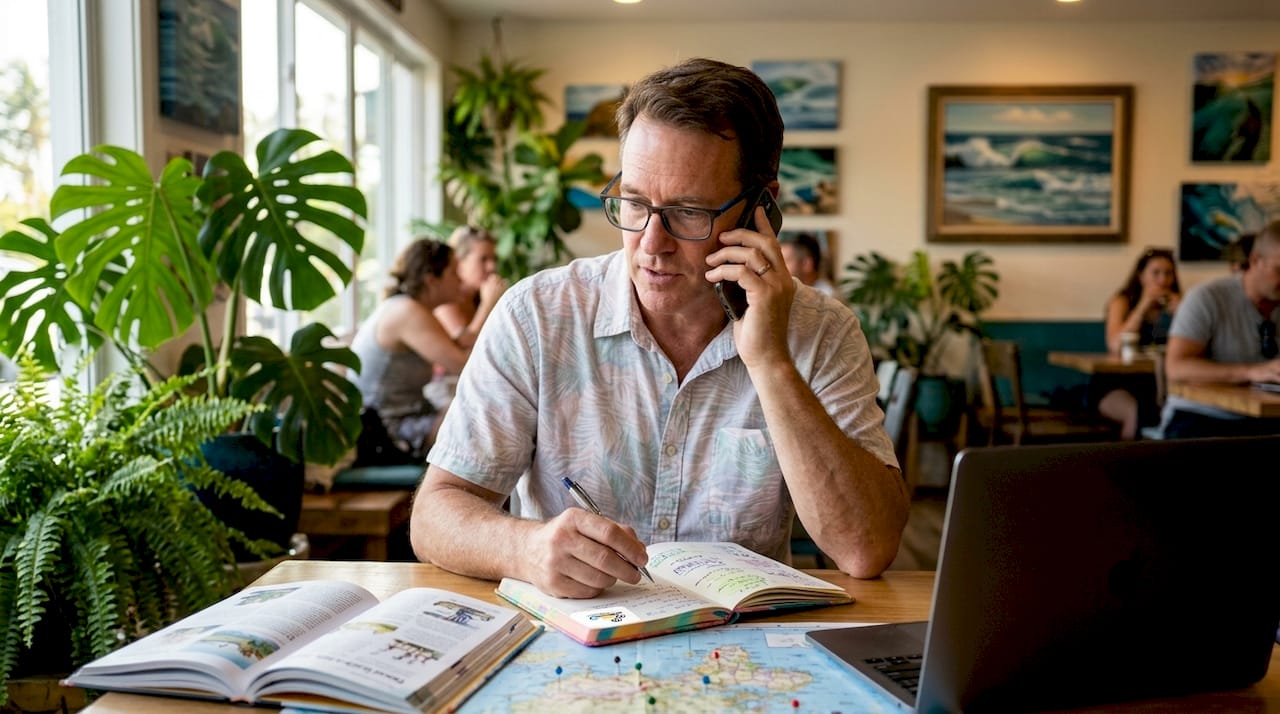
When a hurricane warning hits the Dominican Republic three days before departure, a destination specialist becomes the most valuable person in a traveler’s contact list. Specialists provide direct voice contact and transparent, personalized updates that reduce traveler anxiety in ways that automated alerts and airline apps cannot replicate. This human reassurance is not a soft benefit. It is a structural advantage in crisis situations.
The confidence specialists provide comes from several concrete capabilities:
- On-the-ground intelligence networks. Specialists working in Caribbean and Mexico destinations maintain relationships with local hotel managers, ground operators, and transportation providers. When conditions shift, they receive real-time information before it reaches public channels.
- Rapid rebooking authority. Because specialists hold direct supplier relationships, they can rebook flights, adjust resort stays, and arrange alternative transfers without waiting in the same customer service queues that self-booked travelers face.
- Proactive communication. Rather than waiting for travelers to discover a problem, specialists reach out first. Tom Barber, a noted travel industry figure, highlights that specialists provide confidence by knowing how to act quickly when conditions shift overnight.
- Scenario planning before departure. A good specialist discusses contingency options before the trip begins, so travelers already know the plan B before they ever need it.
“The difference between a traveler with a specialist and one without during a crisis is not luck. It is preparation, relationships, and the ability to make a phone call that actually gets answered.”
Consider a real scenario: a family booked at a Punta Cana resort during a tropical storm season. Their specialist monitors the National Hurricane Center forecasts, contacts the resort directly, and arranges a date shift three days before the storm makes landfall. The family reschedules without penalty. A traveler who booked independently faces cancellation fees, a full customer service hold queue, and no guarantee of rebooking at the same rate.
Human judgment remains vital in a digital-first world precisely because technology can show what is available, but only a specialist can determine what is actually advisable given current conditions. That distinction is the core of what destination advisory services deliver.
Why is destination expertise especially important for Caribbean and Mexico travel?
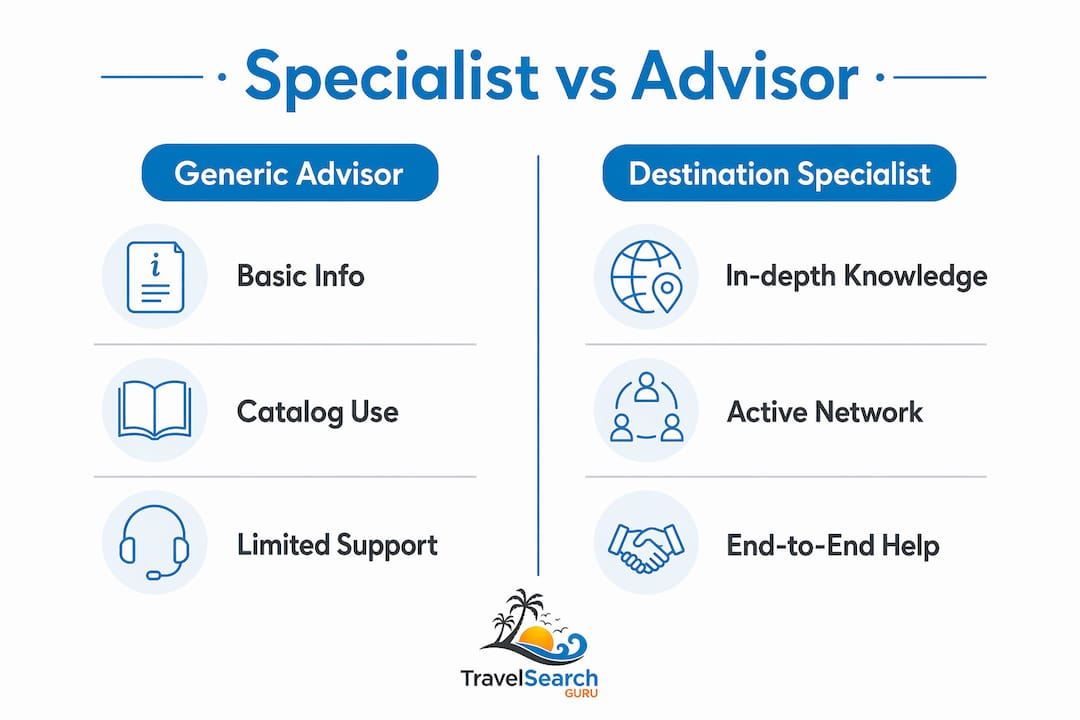
The Caribbean and Mexico are not monolithic destinations. Punta Cana operates differently from Montego Bay. The Riviera Maya has distinct transportation infrastructure, legal considerations, and resort cultures compared to Los Cabos. Specialists with deep local knowledge unlock exclusive resort amenities and carefully navigate the legal and safety issues unique to these regions. Generic travel advisors working from a catalog simply cannot replicate this depth.
Destination expertise in these regions covers four specific areas that directly affect trip quality.
Seasonality and weather timing
The Caribbean hurricane season runs from June through November, with peak activity in August and September. A specialist knows which resorts in Cancún or Barbados offer the best value in shoulder season without unacceptable weather risk. They also know which months deliver the best conditions for specific activities, such as whale shark encounters off Isla Mujeres or diving in the Turks and Caicos.
Resort-specific insider knowledge
Not all five-star resorts deliver the same experience. A specialist who has personally visited or maintains active relationships with properties like Hard Rock Hotel Punta Cana, Secrets Akumal Riviera Maya, or Sandals Royal Barbados can tell you which room categories are worth the upgrade, which restaurants require advance reservations, and which resort amenities are genuinely exclusive versus standard across the chain.
Legal and safety navigation
Mexico and several Caribbean nations have specific entry requirements, tourist card fees, and safety zones that change with some frequency. Specialists track these updates and advise travelers accordingly, preventing issues at immigration or during excursions. Knowing which areas of Cancún’s hotel zone are safe for independent exploration versus which require guided access is knowledge that only comes from active, on-the-ground engagement.
VIP access through supplier relationships
Specialists with established supplier networks can arrange curated excursions and private experiences that are not listed on any booking platform. A private catamaran to Saona Island, a behind-the-scenes cenote tour in the Yucatán, or a reserved cabana at a Riviera Maya beach club are the kinds of additions that transform a standard resort stay into a genuinely memorable trip.
Pro Tip: When evaluating a destination specialist for Caribbean or Mexico travel, ask specifically which resorts they have visited in person within the last 18 months. First-hand knowledge of current property conditions is worth more than any certification.
| Factor | Generic travel advisor | Destination specialist |
|---|---|---|
| Resort knowledge | Works from catalog descriptions | Personal visits and active supplier relationships |
| Crisis response | Refers to airline/hotel customer service | Direct contacts and rebooking authority |
| Seasonal guidance | General weather summaries | Specific month-by-month activity and value windows |
| Legal and safety updates | Standard travel advisory monitoring | Region-specific, real-time tracking |
| Exclusive experiences | Standard package inclusions | VIP access, private tours, and negotiated perks |
The table above illustrates why the importance of travel specialists is not abstract. Each row represents a concrete trip outcome that differs based on who is managing your travel.
What are the typical costs and compensation models for destination specialists?
Advisor compensation varies widely: many specialists work on commission paid by hotels and tour operators, while others charge planning fees ranging from flat rates to hourly consultations. Travelers should always ask about the fee model upfront. Understanding how your specialist is compensated helps you evaluate whether their recommendations align with your interests.
The three most common models work as follows:
- Commission-based. The specialist earns a percentage from the hotel, resort, or tour operator when you book. This cost is built into the package price, meaning you typically pay no additional fee. Commissions often cover the cost of upgrades and perks that effectively save you money compared to booking the same elements separately.
- Planning fee model. Some specialists charge a flat fee per trip, often ranging from a few hundred dollars for a straightforward resort booking to more for complex multi-destination itineraries. This model is common for highly customized trips to multiple Caribbean islands or combined Mexico and Cuba itineraries.
- Hybrid model. A planning fee covers the specialist’s time and expertise, while commissions from suppliers offset or eliminate additional costs. Fee models vary widely, and travelers should evaluate cost against the value delivered, especially for complex international trips.
When evaluating whether a specialist’s fees are justified, consider the full value picture. A specialist who secures a complimentary room upgrade at a Riviera Maya resort, arranges a private airport transfer, and rebooks your flight during a weather delay has delivered tangible financial value that often exceeds any planning fee paid. Travelers value having a human specialist just a phone call away for reassurance and real-time problem solving. That accessibility has a real cost and a real return.
Practical considerations when choosing a specialist include:
- Ask for a written breakdown of all fees before signing any agreement
- Confirm whether the specialist receives higher commissions from specific suppliers, which could influence recommendations
- Request references from past clients who traveled to the same region you are planning to visit
- Verify that the specialist has active relationships with properties in your specific destination, not just general Caribbean or Mexico experience
- Confirm that 24/7 support is included during your travel dates, not just during business hours
The local transportation knowledge a specialist brings to ground logistics alone, from airport transfers to inter-resort shuttles, often justifies the cost for first-time visitors to complex destinations.
Key takeaways
Destination specialists deliver measurably better international travel outcomes through local expertise, supplier relationships, and active crisis management that no booking platform can replicate.
| Point | Details |
|---|---|
| Core function is logistics integration | Specialists build feasible itineraries across flights, transfers, and resorts, not just bookings. |
| Crisis management is a primary value | Direct supplier contacts and real-time intelligence allow rapid rebooking during disruptions. |
| Caribbean and Mexico require regional depth | Resort-specific knowledge, seasonality expertise, and legal tracking shape better trip outcomes. |
| Fee transparency matters | Always ask whether your specialist is commission-based, fee-based, or hybrid before committing. |
| Human judgment outperforms automation | Technology shows what is available; specialists determine what is actually advisable and safe. |
What our team has learned about destination specialists in Caribbean and Mexico travel
We have planned hundreds of trips to Punta Cana, Riviera Maya, Los Cabos, and the wider Caribbean, and the pattern is consistent. Travelers who arrive with a specialist-managed itinerary spend less time solving problems and more time actually enjoying the destination. That sounds obvious, but the gap between a well-planned trip and a self-booked one becomes most visible in the first 24 hours, when transfers, check-ins, and activity bookings either flow or fracture.
The misconception we encounter most often is that destination specialists are a luxury for complex or expensive trips. They are not. A family booking a week at an all-inclusive in Cancún benefits just as much from a specialist’s resort knowledge and transfer coordination as a couple planning a multi-island Caribbean sailing itinerary. The scale differs; the value does not.
What we have also observed is that the post-trip phase is where many specialists fall short. Our team stays engaged after clients return, gathering feedback, noting what worked and what did not, and applying those observations to future planning. This feedback loop is how genuine destination expertise is built over time. It is not something you can replicate with a booking algorithm or a review aggregator.
The travelers who get the most from working with specialists are those who treat the relationship as a partnership rather than a transaction. Share your preferences, your concerns, and your past travel frustrations. The more context a specialist has, the more precisely they can match experiences to what you actually want, not just what looks good in a brochure.
— Our Team at TravelSearch Guru
Plan your Caribbean or Mexico trip with TravelSearch Guru
TravelSearch Guru connects you with destination specialists who know the Caribbean and Mexico from the ground up, not from a catalog. Our team has direct relationships with resorts across Punta Cana, Riviera Maya, Saona Island, and beyond, which means your trip benefits from negotiated rates, exclusive access, and the kind of on-the-ground knowledge that only comes from real experience.
Start with a personalized travel assessment to tell us what you want from your trip. From there, our specialists build an itinerary tailored to your preferences, handle all logistics from airport transfers to curated excursions, and remain available throughout your travel dates. Explore our full range of Caribbean and Mexico destinations and see what expert-managed travel actually looks like in practice.
FAQ
What does a destination specialist actually do?
A destination specialist manages end-to-end international travel logistics, including itinerary planning, supplier negotiation, documentation support, and real-time crisis response. Their role goes well beyond booking flights and hotels.
How are destination specialists different from regular travel agents?
Destination specialists focus on specific regions and maintain active supplier relationships and on-the-ground knowledge that generalist agents do not have. This depth produces better resort recommendations, exclusive access, and faster crisis resolution.
Are destination specialists worth the cost for Caribbean and Mexico trips?
Yes. Specialists typically secure upgrades, perks, and exclusive experiences that offset any planning fees, and their crisis management capabilities protect your investment when disruptions occur. The value is especially clear for first-time visitors to complex destinations.
How do I choose the right international travel consultant?
Ask whether they have personally visited your destination within the last 18 months, request client references from similar trips, and confirm their fee model and 24/7 support availability before committing. Suzanne Connor of The Travel Institute notes that specialization directly enhances recommendation quality and client advocacy.
Can a destination specialist help if something goes wrong during my trip?
Yes. Specialists provide direct support during disruptions, including rebooking, advocacy with airlines and hotels, and real-time updates, until you are safely home. This is one of the most concrete benefits of working with a specialist versus booking independently.