
Simplifying family trip logistics means consolidating every booking, document, and decision into one shared system so nothing falls through the cracks. Families traveling to Caribbean resorts like Excellence Playa Mujeres or Mexico destinations like Hard Rock Hotel Riviera Maya face a specific challenge: coordinating flights, transfers, activities, and accommodations across multiple family members, often including kids and grandparents. The most effective ways to simplify family trip logistics center on three pillars: a centralized planning hub, digital tools like TripIt, and proactive communication before departure. Get these three right, and the vacation starts before you ever leave home.
How does creating a one-source trip system simplify your family travel planning?
A one-source trip system is a single location, whether a shared spreadsheet, a database-style app, or a dedicated folder, where every piece of trip information lives. Information scattered across multiple apps, email threads, and text messages is the leading cause of coordination errors on family trips. When one parent has the flight confirmation and another has the hotel booking and nobody has the transfer details, the trip starts with friction before the plane even lands.
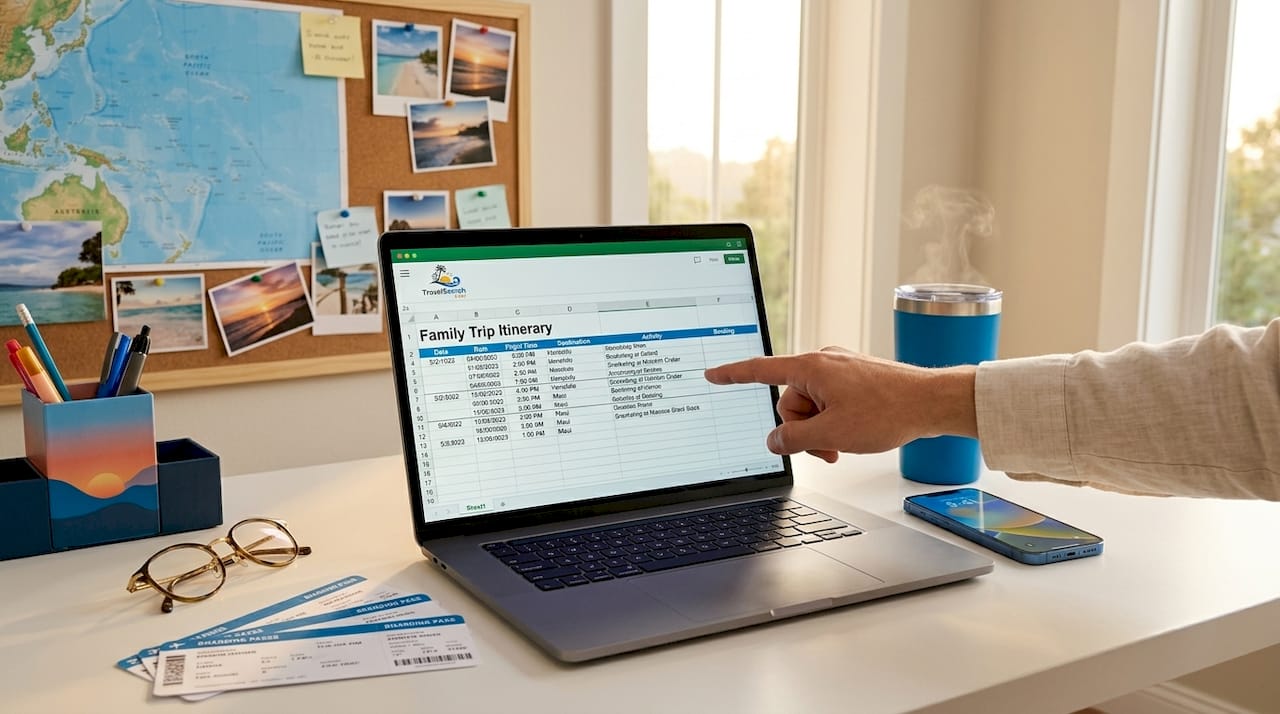
What goes into a one-source trip system
A well-built trip hub contains four core components:
- Itinerary: A day-by-day schedule covering arrival times, resort check-in, planned activities, and departure logistics.
- Booking tracker: Every reservation logged with booking number, cancellation policy, payment status, and key dates.
- Budget ledger: A running total of what has been paid, what is pending, and what is estimated for on-the-ground spending.
- Document folder: Passports, travel insurance, vaccination records, and any resort confirmation letters stored in one place.
The tool you use matters less than the discipline of using it consistently. Google Sheets works for families comfortable with spreadsheets. Notion or Airtable suits those who want a database-style setup. For families who prefer mobile-first tools, apps like TripIt can serve as the itinerary layer while a shared Google Drive folder handles documents and budget.
Pro Tip: Log every reservation immediately after booking. Treat your trip hub like an accounting record: capture the booking number, cancellation deadline, payment status, and confirmation contact in the same session you make the reservation. Delayed logging is where duplicate payments and missed deadlines originate.
Applying this system to Caribbean and Mexico resort trips
For a family trip to Punta Cana or Los Cabos, the one-source system pays off at the airport. Arrival transfers, resort check-in times, and excursion bookings all have specific windows. When those details live in a shared document every adult can access, nobody is standing at baggage claim asking, “Wait, who has the transfer confirmation?” Organize your folders by trip name, not by document type. A folder named “Cancun 2026” containing subfolders for flights, hotel, activities, and documents is far easier to navigate than a folder named “Confirmations” containing three years of mixed bookings.
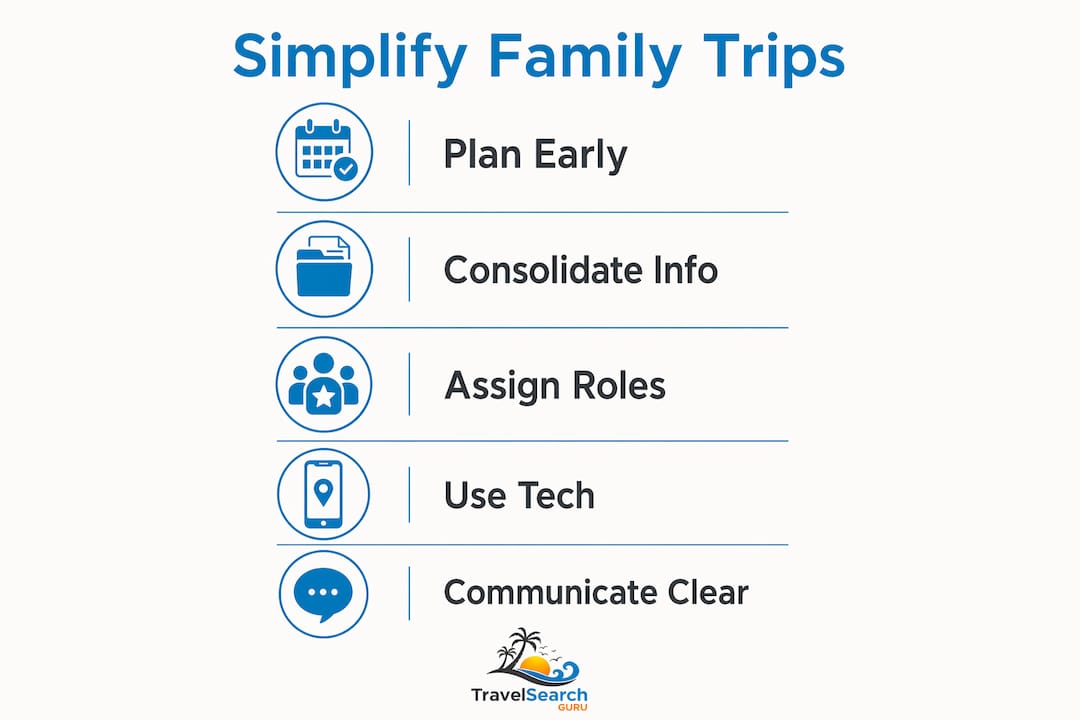
What are the best digital tools to organize and share family travel details?
TripIt automates itinerary building by letting you forward confirmation emails to plans@tripit.com, which then produces a clean, day-by-day itinerary accessible to every family member you share it with. This single feature eliminates the most common logistical failure on family trips: one person holding all the information while everyone else asks repeated questions. TripIt’s free tier handles the basics well for most families.
TripIt Pro, priced at $49 per year, adds a meaningful set of features for families with complex itineraries:
- Seat tracker: Monitors seat availability and alerts you when better seats open up on your flights.
- Fare alerts: Notifies you if the price drops after booking, giving you leverage to rebook or request a credit.
- Inbox sync: Automatically scans your email for travel confirmations without requiring manual forwarding.
- Apple Intelligence integration: Processes PDFs and photos to extract booking details automatically.
The inbox sync feature is particularly valuable for families managing bookings across multiple email accounts. Forwarding confirmations early and consistently keeps your itinerary current and eliminates the end-of-planning scramble where you realize three reservations never made it into the system.
Pro Tip: Set up your TripIt account and share the trip with all traveling adults the moment you book your first reservation. Do not wait until the trip is fully planned. Early setup means every subsequent booking populates into a shared itinerary automatically, and a unified itinerary means fewer repeated questions from family members about times and locations.
TripIt does have real limitations worth knowing. Items you forget to forward simply do not appear. Manual passes, like a printed resort activity voucher, require a photo or manual entry. For families booking through TravelSearch Guru, where transfers and excursions are pre-arranged, pairing TripIt with a shared Google Drive folder covers both the automated and manual sides of trip documentation cleanly.
When should you start planning your family trip to avoid last-minute chaos?
The recommended planning timeline is 6 to 8 weeks minimum for international trips and 2 to 3 weeks for regional travel. Families heading to Caribbean or Mexico resorts should treat their trip as international even when the flight is short, because passport requirements, transfer logistics, and resort-specific booking windows all demand lead time.
Here is a practical milestone timeline for a Caribbean or Mexico family trip:
- 8 weeks out: Book flights and resort accommodations. Lock in airport transfers. Start your one-source trip system folder.
- 6 weeks out: Book high-demand excursions. In destinations like Punta Cana, private catamaran trips and Saona Island excursions sell out weeks in advance.
- 4 weeks out: Confirm all bookings are logged in your trip hub. Check passport expiration dates for every traveler.
- 2 weeks out: Complete your family trip checklist. Arrange travel insurance if not already done. Notify your bank of travel dates.
- 1 week out: Download offline maps and resort apps. Confirm transfer pickup times and resort check-in procedures.
- Day before departure: Charge all devices. Organize physical documents in one envelope or travel wallet. Confirm every booking one final time.
Children require their own passports for international air travel, and obtaining one involves citizenship proof, parental consent forms, and sometimes notarized letters when one parent is absent. Build passport processing time into your 8-week window, not as an afterthought.
Pro Tip: Plan one main activity per day rather than stacking multiple excursions. Over-scheduling is the fastest way to exhaust kids and create mid-trip tension. One great experience per day, with resort time built around it, consistently outperforms an ambitious itinerary that leaves everyone drained by day three.
How does clear communication improve multigenerational family trip logistics?
Proactive communication about expectations around timing, costs, and flexibility is the single most effective way to prevent mid-trip friction on group family vacations. Assumptions are where multigenerational trips break down. Grandparents assume the grandkids will be in bed by 8 p.m. Teenagers assume they can explore the resort independently. Parents assume everyone agrees on the dinner plan. None of these assumptions get tested until the trip is already underway.
Address these topics before departure:
- Budget transparency: Clarify who is paying for what. Shared excursions, resort dining credits, and group transfers all need a clear financial owner before anyone arrives.
- Scheduling flexibility: Agree on which activities are group commitments and which are optional. Not every family member needs to be on every excursion.
- Energy and pace: Older travelers and young children often need rest periods that active adults do not. Build downtime into the shared itinerary explicitly.
- Lodging arrangements: For large groups at resorts like Iberostar Bavaro in Punta Cana or Barcelo Maya Grand Resort in Mexico, connecting rooms or adjacent suites reduce daily coordination friction significantly.
“A hybrid planning style that balances a flexible itinerary with proactive communication reduces tension on multigenerational trips, accommodating varying energy and scheduling needs.” Source
For group travel logistics specifically, the group travel planning guide from Ezcape reinforces that designating one point person per family unit, rather than one person managing everything for 12 people, distributes responsibility without creating confusion. Each unit handles their own documents and packing while one lead coordinator manages the shared itinerary and group bookings.
Pro Tip: Send a one-page trip summary to every traveling adult at least one week before departure. Include pickup times, resort address, emergency contacts, and the link to the shared itinerary. This single document cuts the volume of “what time do we leave?” messages by a significant margin.
Key takeaways
The most effective approach to simplifying family trip logistics combines a one-source planning system, early digital tool setup, a phased timeline, and clear pre-trip communication with every traveling adult.
| Point | Details |
|---|---|
| Build a one-source system | Log every booking immediately with confirmation number, cancellation policy, and payment status in one shared location. |
| Use TripIt early | Set up and share your TripIt itinerary at the first booking, not after all reservations are made. |
| Start planning 6 to 8 weeks out | International Caribbean and Mexico trips need passport checks, transfer bookings, and excursion reservations well in advance. |
| Communicate expectations before departure | Clarify budget, scheduling flexibility, and lodging arrangements with all family members before anyone boards a plane. |
| Plan one main activity per day | Matching the itinerary to family energy levels prevents over-scheduling and keeps the trip enjoyable for every age group. |
What our team has learned about family trip logistics in the Caribbean and Mexico
We have helped hundreds of families plan trips to resorts across the Dominican Republic, Mexico, and the wider Caribbean, and the pattern we see most often is the same: families arrive with excitement and leave with regret about the things that went wrong logistically, not the destination itself. The resort was beautiful. The transfer was late. Nobody had the confirmation number. The excursion was fully booked because nobody reserved it in advance.
The one-source trip system is not a complicated concept, but it requires a mindset shift. Most families treat trip planning as a series of individual bookings rather than a single coordinated project. The moment you start treating your vacation like a project with a shared document, a timeline, and assigned responsibilities, the entire experience changes.
Our team’s favorite workflow for Caribbean and Mexico resort trips is straightforward: TripIt handles the live itinerary that everyone can check on their phones, a shared Google Drive folder holds all documents and the budget tracker, and TravelSearch Guru handles the transfers and excursions so those logistics never require last-minute coordination. Choosing an all-inclusive resort like Secrets Cap Cana or Grand Velas Riviera Maya also removes a significant layer of daily decision-making. When meals, drinks, and most activities are included, the number of on-the-ground logistics decisions drops sharply.
The families who have the best trips are not the ones with the most detailed itineraries. They are the ones who built a reusable template, communicated clearly before departure, and left enough room in the schedule for the unexpected moments that become the best memories.
— Our Team at TravelSearch Guru
Let TravelSearch Guru handle the logistics for your next family trip
Planning a family trip to the Caribbean or Mexico involves more moving parts than most families anticipate until they are already in the middle of it. TravelSearch Guru exists to take the most stressful pieces off your plate entirely.
Our team curates family-friendly resort packages across top Caribbean and Mexico destinations, coordinates group bookings for multigenerational travel, and arranges airport transfers so your family moves from the plane to the resort without a single logistical gap. We also offer a full range of trending excursions that can be booked in advance and added directly to your shared itinerary. Browse our destinations to find the right resort for your family’s next trip, and let our team handle the details that matter most.
FAQ
What is the fastest way to organize a family trip?
Build a one-source trip system immediately after your first booking. Log every reservation with its confirmation number, cancellation policy, and payment status in a single shared document accessible to all traveling adults.
How far in advance should families book Caribbean or Mexico resort trips?
Start planning 6 to 8 weeks before departure for international trips. Book flights and accommodations first, then excursions, since popular activities at resorts in Punta Cana and the Riviera Maya sell out well in advance.
Do children need their own passports for Caribbean and Mexico travel?
Yes. Children require their own passports for international air travel, including trips to the Caribbean and Mexico. The process requires citizenship proof and parental consent, so factor processing time into your planning window.
What app is best for sharing a family trip itinerary?
TripIt builds a shared itinerary automatically from forwarded confirmation emails and lets you share it with every family member. TripIt Pro adds inbox sync and fare alerts for $49 per year, which suits families with complex multi-leg itineraries.
How do you manage logistics for a multigenerational family trip?
Designate one point person per family unit for documents and packing, and assign one lead coordinator for the shared itinerary and group bookings. Clear pre-trip communication about budget, scheduling, and flexibility prevents the majority of mid-trip friction.