
Coordinating a family group travel itinerary is the process of building one unified plan that accounts for every traveler’s age, preference, and schedule without letting any single person’s needs dominate the trip. Most families underestimate how much coordination a multi-generational vacation actually requires. A group with toddlers, teenagers, and grandparents is, as Plan Harmony describes, essentially “five different trips simultaneously” happening at one destination. The good news: with the right tools, a clear structure, and local expertise from platforms like Travelsearch, you can turn that complexity into a genuinely great trip for everyone.
What tools do you need to coordinate a family group itinerary?
The right tools make or break family travel planning before you ever book a flight. Three categories matter most: shared planning platforms, budget apps, and communication tools.
Shared digital itinerary platforms let every family member view the same plan in real time. Apps like Google Sheets, TripIt, or dedicated planners allow voting on activities, flagging conflicts, and updating logistics without a flood of texts. Centralized itinerary platforms reduce repetitive questions and keep the group aligned, which is especially important when you have six or more travelers with different priorities.

Budget tracking apps like Splitwise or Trail Wallet let you log shared expenses and split costs fairly. Transparency about money prevents the most common source of tension in group travel. When everyone sees the same numbers, disagreements shrink.
Communication tools matter more than most families expect. A dedicated WhatsApp group or a Slack channel for the trip keeps decisions visible and searchable. Polls inside these tools let you settle activity debates without a 45-minute phone call.
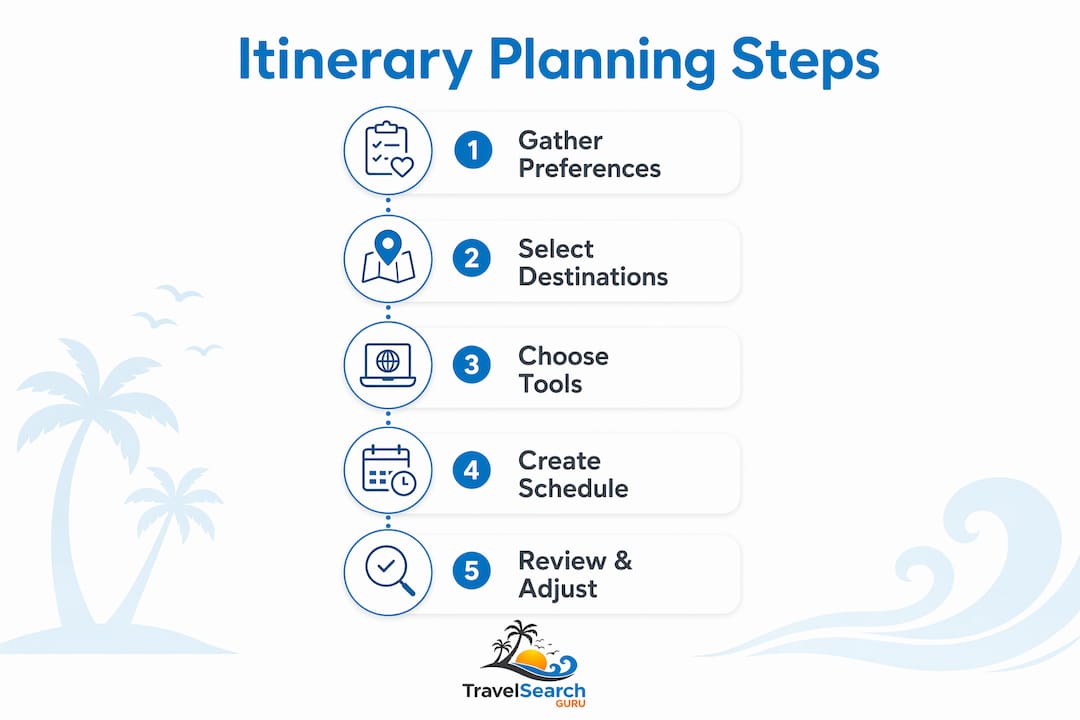
Before you open any app, gather this information from every traveler:
- Ages and mobility levels (stroller needs, wheelchair access, walking limits)
- Dietary restrictions and meal preferences
- Must-do activities versus hard passes
- Budget range per person
- Preferred wake-up and bedtime windows
Pro Tip: Use a simple Google Form sent to all family members two months out. Ask three questions: one activity they want, one they want to avoid, and their daily energy level (morning person vs. night owl). The answers will shape your entire itinerary structure.
Destination choice is also a prerequisite, not an afterthought. Destinations with varied age-appropriate attractions within walking distance reduce transit fatigue and cut down on disagreements. Caribbean resorts like Royalton Antigua and all-inclusive properties in the Dominican Republic or Riviera Maya in Mexico are built for exactly this kind of group. They concentrate pools, beaches, kids’ clubs, adult lounges, and dining options in one place. Travelsearch’s local destination data helps families match resort features to their specific group makeup before booking.
| Tool Category | Example Tools | Primary Benefit |
|---|---|---|
| Shared itinerary | TripIt, Google Sheets | Real-time visibility for all travelers |
| Budget tracking | Splitwise, Trail Wallet | Fair expense splitting, no surprises |
| Communication | WhatsApp, Slack | Centralized decisions and updates |
| Activity research | Travelsearch platform | Local resort and excursion data |
How do you build a balanced daily itinerary for all ages?
The 70/30 itinerary structure is the most practical framework for family group travel: 70% of each day is shared group activities, and 30% is independent time. That split respects the fact that teenagers want autonomy, toddlers need naps, and grandparents may want a quiet afternoon on the beach while the kids hit the waterpark.
Plan around the youngest travelers first
Young children set the rhythm of the day whether you plan for it or not. Schedule the biggest group activity in the morning when energy is highest. Build in a midday rest block of 1.5–2 hours. Then plan a lighter afternoon activity or free swim. This structure works at nearly every Caribbean and Mexico resort because amenities are spread across the day.
Limit activities to 1–2 main events per day when traveling with young kids. Overscheduling is the most common mistake families make, and it leads directly to meltdowns and exhaustion for every age group, not just the children.
Layer activities by age group
A well-built group itinerary for families includes three layers:
- Universal activities that every age enjoys: beach days at Punta Cana, snorkeling at a Caribbean reef, a catamaran tour, or a resort pool day at a Riviera Maya all-inclusive.
- Teen-focused options during independent blocks: water sports rentals, beach volleyball, or a supervised excursion like a zip-line tour in Mexico.
- Adult and grandparent options during the same blocks: spa treatments, a resort bar, a cooking class, or a quiet sunset cruise.
This layered approach means no one sits through an activity they dislike just to keep the group together.
Pro Tip: Build one “surprise” activity into the itinerary that nobody knows about in advance. A private catamaran tour or a visit to a local cenote in Mexico creates a shared memory that becomes the story everyone tells afterward.
Use visual day maps
Print or share a simple visual schedule for each day. Color-code by age group. This single step eliminates the “what are we doing today?” question that derails mornings. Tools like Canva or a shared Google Doc work well. Travelsearch’s activity planning resources can help you slot in excursions that fit each day’s structure.
| Time Block | Group Activity | Independent Option |
|---|---|---|
| 8:00–11:00 AM | Beach or pool (all ages) | N/A |
| 11:00 AM–1:00 PM | Snorkeling tour or excursion | Teen water sports |
| 1:00–3:00 PM | Lunch + rest/nap block | Adult spa or lounge |
| 3:00–6:00 PM | Resort pool or kids’ club | Teen beach volleyball |
| 6:00–8:00 PM | Group dinner | N/A |
How do you organize logistics and budget for a group family trip?
Logistics are where most family group trips fall apart. Transportation, accommodations, and money management each require a clear decision before the trip, not during it.
Budget allocation
Family vacation budgets typically break down as follows: 30–40% transportation, 25–35% accommodation, 15–20% food, 10–15% activities, and 5–10% miscellaneous. That means for a $10,000 group trip, you should expect to spend $3,000–$4,000 just getting everyone there and back. Knowing this upfront prevents the shock of seeing flight costs eat half the budget.
Shared budgeting transparency through expense splitting apps avoids conflicts and confusion over costs among family members. Assign one person as the “budget lead” who tracks all shared expenses in Splitwise and sends a weekly summary. This keeps everyone accountable without making money a constant conversation.
Choosing the right accommodations
Vacation homes and adjoining apartments with common spaces accommodate multi-family groups better than traditional hotel blocks. A villa with a shared kitchen and living area at a Dominican Republic resort gives grandparents a quiet space while kids play nearby. For families who prefer resort amenities, look for properties that offer connecting rooms or family suites. You can explore the vacation rental vs. resort tradeoff in detail to match your group’s specific needs.
Coordinating airport transfers
Airport transfers for large groups require advance booking. Showing up at Punta Cana or Cancun International Airport with 10 family members and expecting a van is a gamble you will lose. Travelsearch’s airport transfer service books private vehicles sized to your group, so arrivals and departures run on a fixed schedule without the chaos of splitting into multiple taxis.
Pro Tip: Book your airport transfers at the same time you book flights. Transfer availability at popular Caribbean and Mexico resorts fills up fast during peak season, especially for large vehicles.
Booking timeline
Start planning about 3 months ahead for most family group trips. That window gives you enough time to secure flights, accommodations, and transfers without the mental fatigue of a six-month planning marathon. For peak Caribbean and Mexico travel months (december through april), add an extra 4–6 weeks to that timeline.
What are the biggest challenges in coordinating group family travel?
Even well-planned family group trips hit friction points. Knowing the most common ones in advance lets you handle them without derailing the trip.
Conflicting preferences are inevitable when you mix ages and personalities. The fix is not to force consensus on every decision. Use the 70/30 structure to give everyone a win. When two activities conflict, put it to a group vote using a WhatsApp poll. Majority rules, and the minority gets priority on the next choice.
Itinerary overload is the second most common problem. Families pack too much into each day because they feel the pressure to justify the cost of the trip. The balance between activities and downtime is critical. Flexible blocks are not wasted time. They are the moments where the best memories actually happen.
Last-minute changes hit every group trip. Someone gets sick. A tour gets canceled. Weather shifts. AI-powered itinerary planners can manage complex dependencies and adapt automatically to delays or changes, adjusting timing and activity sequences without requiring you to rebuild the plan from scratch. Tools like Jipsa handle this kind of dynamic replanning well.
“Including backup indoor activities and plans for bad weather keeps family trips on track despite uncertainty.” Plan Harmony
Pro Tip: Build a “Plan B” list of three indoor or low-energy activities for every destination. At a Riviera Maya resort, that might mean a cooking class, a resort movie night, or a board game afternoon at the villa. Having the list ready means a rainy day becomes a fun pivot, not a crisis.
Communication gaps cause more stress than almost any logistical problem. Assign a single “trip coordinator” who owns the master itinerary and sends daily updates the night before. One message per day with the next day’s plan eliminates morning confusion and keeps everyone moving in the same direction. For more on simplifying family trip logistics, our team has covered the key strategies in detail.
How does Travelsearch help you plan a family group trip in the caribbean and mexico?
Travelsearch brings local destination knowledge that generic planning apps simply cannot replicate. Our team has direct experience with Caribbean and Mexico resorts, which means the recommendations you get are grounded in how these destinations actually operate, not just what looks good on a website.
Here is what Travelsearch provides for family group itinerary coordination:
- Resort matching: We connect families with properties that fit their group size, age range, and budget. Royalton Antigua, Hard Rock Punta Cana, and Barceló Maya Riviera are just a few resorts our team knows in detail.
- Airport transfers: Private vehicles sized to your group, booked in advance, so arrivals and departures are never chaotic.
- Excursion booking: From snorkeling tours in Antigua to cenote visits in Mexico, we book family-friendly excursions that fit every age group in your party.
- Single platform coordination: Transfers, activities, and resort recommendations in one place, which cuts the back-and-forth of managing multiple vendors.
- Local expertise: Our team knows which resorts have the best kids’ clubs, which beaches are calm enough for toddlers, and which excursions work for grandparents with limited mobility.
Local travel experts reduce travel stress by handling the details that families consistently underestimate, from transfer timing to activity age restrictions. That local knowledge is the difference between a trip that runs smoothly and one that spends its first day solving problems that should have been solved at home.
Key takeaways
A well-structured family group itinerary built on the 70/30 framework, transparent budgeting, and local destination expertise produces the most consistent results for multi-generational travel.
| Point | Details |
|---|---|
| Use the 70/30 framework | Allocate 70% of each day to shared activities and 30% to independent time for all ages. |
| Centralize your itinerary | One shared platform reduces confusion and keeps every family member aligned on the plan. |
| Book transfers early | Secure airport transfers at the time of flight booking, especially for Caribbean and Mexico peak season. |
| Limit daily activities | Plan 1–2 main activities per day to prevent burnout, particularly when traveling with young children. |
| Budget with transparency | Use expense splitting apps so every traveler sees shared costs clearly and conflicts stay minimal. |
What we’ve learned coordinating family group trips
The most common mistake we see families make is treating the itinerary as a fixed contract instead of a living document. Families spend weeks building the perfect schedule, then feel like failures when day three looks nothing like the plan. That rigidity is the problem, not the deviation.
The families who have the best trips are the ones who build flexibility into the structure from the start. They use the 70/30 framework not as a rule but as a permission slip. It tells teenagers they will get their own time. It tells grandparents they will not be dragged through a waterpark. It tells parents they will still have shared moments that make the trip feel worth it.
We have also seen how much destination choice matters. Families who pick Caribbean and Mexico all-inclusive resorts for group travel are making a smart logistical decision. Everything is close. Meals are covered. Kids have supervised activities. Adults have their own spaces. The resort does a lot of the coordination work for you before you even arrive.
The other thing we have learned: one person needs to own the plan. Not control it, but own it. That means sending the daily update, tracking the shared budget, and making the call when the group cannot agree. Shared ownership sounds democratic, but it usually means nobody is actually responsible. Pick your trip coordinator early and give them the authority to make decisions.
Technology helps, but it does not replace judgment. AI planners and shared apps are genuinely useful for managing complexity. They are not a substitute for knowing your family well enough to build a plan that actually fits them.
— Our Team at Travelsearch
Plan your next family group trip with Travelsearch
Coordinating a group trip across multiple ages, preferences, and logistics is a real challenge. Travelsearch makes it manageable. Our team handles the details that derail most family vacations, from private airport transfers in the Dominican Republic to curated family excursions across the Caribbean and Mexico.
Whether you are organizing a multigenerational reunion at a Riviera Maya resort or a first big family trip to Punta Cana, our platform connects you with trusted accommodations, transfers, and activities in one place. You bring the family. We handle the coordination. Start by exploring our Caribbean and Mexico destinations to find the right fit for your group.
FAQ
What is a family group travel itinerary?
A family group travel itinerary is a shared day-by-day plan that organizes activities, transportation, meals, and accommodations for multiple family members traveling together. It accounts for different ages, preferences, and schedules to keep the group aligned.
How far in advance should you plan a family group trip?
Start planning about 3 months ahead for most family group trips. For peak Caribbean and Mexico travel seasons, begin 4–5 months out to secure the best rates on flights, accommodations, and transfers.
How do you handle conflicting preferences in a group itinerary?
Use the 70/30 itinerary structure: 70% shared group activities and 30% independent time. This gives every age group their preferred activities without forcing the whole family into every event.
What is the best accommodation type for large family groups?
Vacation homes or adjoining apartments with common spaces work better than traditional hotel blocks for multi-family groups. Caribbean and Mexico resort villas with shared pools and kitchens are a strong option for groups of eight or more.
How do you manage the budget fairly for a family group trip?
Assign one person as the budget lead and use an expense splitting app like Splitwise to track all shared costs. Shared budgeting transparency prevents the conflicts that arise when travelers have different assumptions about who owes what.