
Traditional cultural excursions are immersive travel experiences that connect you directly with the living heritage, customs, and daily rhythms of a destination through hands-on participation. Unlike passive sightseeing, these experiences place you inside the culture rather than in front of it. From coffee plantation tours in Mexico to fishing village visits along the Caribbean coast, the types of traditional cultural excursions available today span agricultural, artisan, water-based, and festival-centered activities. Each one offers something a resort pool simply cannot: a genuine human connection to place. This guide breaks down every major category so you can choose the experience that fits your travel style.
1. Types of traditional cultural excursions: an overview
Traditional cultural excursions, often called cultural heritage tours or cultural immersion trips in the travel industry, are defined by three qualities: local leadership, participatory structure, and authentic context. You are not watching a performance staged for tourists. You are joining a community in something it actually does. That distinction matters enormously for the quality of your experience and for the communities you visit.
The spectrum is wide. Agricultural tours, river excursions, craft workshops, community festivals, culinary experiences, and spiritual site visits all qualify. What unites them is the living heritage they reveal: the values, rituals, and oral traditions that define how a community operates. In the Caribbean and Mexico, this heritage is especially rich, layered across Indigenous, African, Spanish, and Creole influences that show up differently in every village, river, and kitchen.
TravelSearch Guru focuses specifically on these destinations, which means our team has direct knowledge of which excursions deliver genuine immersion and which ones deliver a rehearsed show. The difference is always visible within the first hour.
2. Agricultural and rural cultural excursions
Agricultural and rural excursions are among the oldest forms of cultural heritage tours. They place you inside the seasonal rhythms of farming, herding, or fishing communities, where the pace of life is set by weather, harvest, and tide rather than a tour bus schedule.
In Mexico, this category includes coffee plantation visits in Chiapas and Veracruz, where you can pick, process, and roast beans alongside workers who have done it for generations. In the Caribbean, traditional fishing village tours in the Dominican Republic or Jamaica let you haul nets, learn to clean catch, and share a meal cooked on the beach. These are not demonstrations. They are working days that you join.
Satoyama farmhouse stays in Japan, which combine nature, local food, and social interaction, have grown rapidly in popularity because urban travelers crave exactly this kind of grounded, stress-relieving contact with traditional living. The same dynamic drives demand for rural excursions in the Caribbean and Mexico. Travelers who spend a morning planting or harvesting consistently report it as the most memorable part of their trip.
Key activities in this category include:
- Coffee and cacao plantation tours with hands-on harvesting
- Traditional fishing excursions with local crews in coastal villages
- Sugarcane farm visits with demonstrations of traditional processing
- Cattle herding and pastoral walks through rural countryside
- Seasonal fruit and vegetable harvesting on family-run farms
The seasonal and landscape rhythms of these excursions are not inconveniences. They are the point. Aligning your visit with harvest season or a specific agricultural cycle deepens the experience significantly.
Pro Tip: Book agricultural excursions at least six to eight weeks in advance. Seasonal activities like cacao harvest in the Dominican Republic or coffee picking in Oaxaca fill quickly, and the best locally led programs have limited spots by design.
3. River and water-based cultural excursions
Water has always been the organizing principle of Caribbean and Mexican communities. Rivers, canals, lagoons, and coastlines are where trade happened, where festivals were born, and where daily life still plays out in ways that road-based tourism completely misses.
River and water-based cultural excursions give you access to this world. The format varies, but the best experiences share a common structure:
- Small group size. Programs capped at 8 to 16 participants allow genuine interaction with communities along the route, something large boats structurally cannot offer.
- Flexible scheduling. The best water excursions move at the pace of the river and the community, not a fixed itinerary. Stops are extended when something interesting is happening.
- Community access. Routes pass through working villages, local markets, and cultural sites that are not accessible by road.
- Cultural programming. Music, storytelling, and food preparation are woven into the journey rather than added as optional extras.
- Local guides. Guides are drawn from the communities along the route, not from a central tourism office.
Dahabiya cruises on the Nile demonstrate exactly how this model works at its best. Groups of 8 to 16 guests travel on unhurried schedules with direct access to villages and temple sites that large cruise ships bypass entirely. That model translates directly to Caribbean river excursions, lagoon tours in the Yucatán, and canal journeys through mangrove ecosystems in Belize and Costa Rica.
In the Dominican Republic, river excursions through the Chavón River valley combine natural scenery with visits to Taíno cultural sites and local artisan communities. In Mexico’s Yucatán Peninsula, cenote and river tours connect travelers with Maya water traditions that are still practiced in surrounding villages. A VIP catamaran tour along the Caribbean coast adds a layer of comfort while keeping the cultural access intact.
Pro Tip: Ask your excursion provider whether the guide lives in one of the communities along the route. A guide who is also a community member will show you things that no outside guide can.
4. Traditional craft and artisan workshops
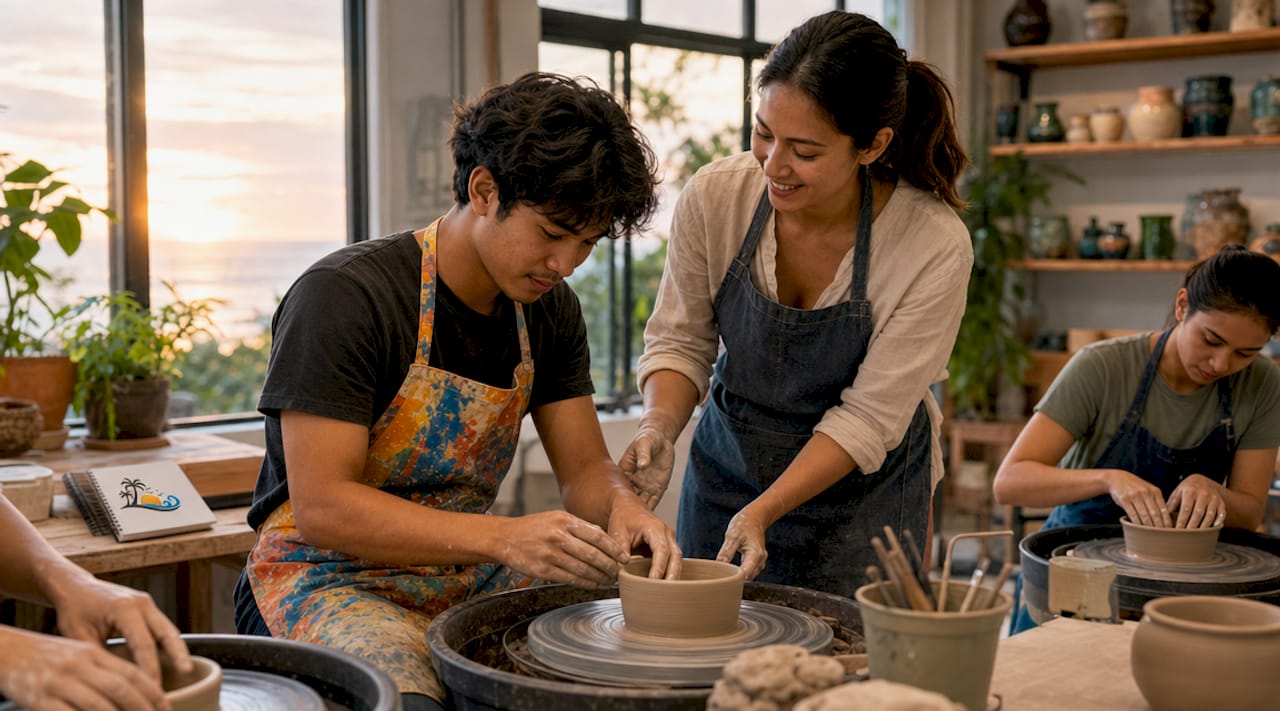
Craft and artisan workshops are the most direct form of cultural immersion trip available. You are not observing a tradition. You are attempting it yourself, under the instruction of someone who has practiced it for decades. That gap between your first attempt and the artisan’s effortless skill tells you more about a culture than any museum exhibit.
Craft workshops covering pottery, weaving, bamboo work, and cooking classes led by master artisans preserve cultural heritage while giving travelers meaningful participation. In Mexico, this category is exceptionally rich. Oaxacan black clay pottery, Zapotec weaving in Teotitlán del Valle, and amate bark painting in the Sierra Norte are all workshop experiences led by families who have maintained these practices across multiple generations.
In the Caribbean, craft traditions reflect the region’s layered history. Dominican amber and larimar jewelry workshops, Haitian metal sculpture studios, and Jamaican basket weaving sessions all offer genuine ethnic cultural experiences that connect you to specific historical and social contexts. These are not souvenir shops with a demonstration table. They are working studios where the product you make goes home with you as something you actually created.
Core workshop categories to look for include:
- Textile weaving and natural dyeing using traditional plant-based pigments
- Pottery and ceramic work with local clay and firing techniques
- Wood carving and mask making tied to specific ceremonial traditions
- Traditional cooking classes focused on pre-colonial or Creole recipes
- Music and percussion workshops using instruments made locally
Locally led workshops that focus on learning and preservation rather than performance create the greatest positive impact for both destinations and visitors. The distinction is visible: a locally led workshop has irregular hours, real tools, and a teacher who occasionally gets frustrated when you do something wrong. That friction is authenticity.
Pro Tip: Choose workshops where the artisan’s work is sold in local markets, not just to tourists. That economic reality means the craft is alive and functional, not preserved solely for visitor consumption.
5. Community festival and ceremonial excursions
Community festivals are the most concentrated expression of cultural identity available to travelers. A single afternoon at a genuine local festival delivers more cultural information than three days of museum visits. The music, food, dress, social hierarchies, and spiritual beliefs of a community are all visible simultaneously.
In Mexico, the calendar of traditional festivals is dense and regionally specific. Day of the Dead celebrations in Oaxaca and Michoacán are the most internationally recognized, but equally powerful are the Guelaguetza dance festival, the Huey Atlixcáyotl festival in Puebla, and the Carnival of Veracruz, each rooted in Indigenous and colonial-era traditions. In the Caribbean, Trinidad’s Carnival, Junkanoo in the Bahamas, and the Merengue Festival in the Dominican Republic each represent distinct cultural lineages expressed through music, costume, and public ritual.
The key to a meaningful festival excursion is context. Attending a festival without understanding its origins reduces it to spectacle. The best cultural adventure vacations pair festival attendance with a briefing from a local cultural historian or community leader who explains what you are witnessing and why it matters. That context transforms a colorful street parade into a legible cultural document.
Our team at TravelSearch Guru specifically vets festival excursions to confirm that traveler participation is welcomed by the community rather than merely tolerated. That distinction matters for your experience and for the community’s relationship with tourism.
6. Culinary and food heritage excursions
Food is the most accessible entry point into any culture. Every dish carries history: the trade routes that brought specific spices, the agricultural conditions that shaped staple crops, the social rituals that determine who cooks, who serves, and who eats first. Culinary excursions make that history edible.
In Mexico, food heritage tours range from market visits in Oaxaca’s Mercado Benito Juárez to mole cooking classes in Puebla to mezcal distillery tours in the valleys around Mitla. Each experience connects a specific food or drink to its geographic, agricultural, and social origins. In the Caribbean, culinary excursions often center on the African and Indigenous roots of dishes like sancocho, mofongo, and jerk, with cooking sessions led by home cooks rather than restaurant chefs.
The home cook distinction is significant. Restaurant chefs adapt recipes for broad palatability. Home cooks make food the way their grandmothers made it, with the proportions and techniques that reflect family and community identity rather than market preference. That is the version worth seeking out on a cultural immersion trip.
Culinary excursions also support local economies directly. When you pay for a cooking class in a family home or buy ingredients at a community market, the money stays in the neighborhood. That economic directness is one of the clearest markers of a genuine local cultural activity versus a tourist-facing product.
7. Spiritual and sacred site excursions
Sacred site excursions occupy a specific and sensitive category within traditional travel experiences. They include visits to active temples, ceremonial grounds, ancestral burial sites, and pilgrimage routes that are still used by living communities for religious and spiritual practice.
In Mexico, Maya and Aztec archaeological sites like Chichén Itzá, Palenque, and Monte Albán are the most visited, but the most culturally significant excursions happen at smaller, less-trafficked sites where Indigenous communities maintain active ceremonial relationships with the land. In the Yucatán, some Maya communities offer guided visits to cenotes that are still used for ritual purposes, with explanations of cosmological significance provided by community members rather than outside archaeologists.
In the Caribbean, spiritual excursions often engage with Afro-Caribbean religious traditions including Vodou in Haiti, Santería in Cuba, and Rastafarian cultural sites in Jamaica. These require particular sensitivity and should always be arranged through locally led programs that have established trust with the communities involved. Showing up uninvited or treating sacred practices as entertainment causes real harm.
Guidelines for cultural excursions at sacred sites are straightforward: follow the lead of your local guide on photography, dress, and behavior; ask before you record anything; and recognize that your presence is a privilege extended by the community, not a right purchased with a ticket.
8. How to choose the right cultural excursion for your trip
Selecting the right excursion from the full range of popular cultural destinations and experience types comes down to four criteria. Apply them consistently and you will avoid the staged tourist shows that dominate many resort activity menus.
| Excursion type | Activity level | Immersion depth | Cultural focus |
|---|---|---|---|
| Agricultural and rural | Moderate to high | Very high | Farming, food systems, rural life |
| River and water-based | Low to moderate | High | Community life, trade, ecology |
| Craft and artisan workshops | Low | Very high | Material culture, heritage skills |
| Community festivals | Low | High | Music, ritual, social identity |
| Culinary and food heritage | Low | High | Food history, family traditions |
| Spiritual and sacred sites | Low to moderate | Moderate to high | Religion, cosmology, ancestry |
Regenerative travel principles advise prioritizing locally led programs that support cultural and environmental sustainability rather than staged tourist shows. Ask your provider three direct questions: Who leads this excursion and where are they from? How many participants are in each group? Does any portion of the fee go directly to the community? The answers will tell you everything you need to know about whether the experience is genuine.
For travelers booking through resorts in Punta Cana, Cancún, or Los Cabos, the excursion menu at the front desk is rarely the best option. Those programs are selected for convenience and volume, not cultural depth. Our team at TravelSearch Guru maintains a vetted network of local partners across the Caribbean and Mexico specifically to give you access to experiences that do not appear on resort activity boards. You can explore Caribbean and Mexico destinations and the cultural excursions available in each one before you book your trip.
Key takeaways
The most rewarding types of traditional cultural excursions share one defining quality: they are led by community members, not outside operators, and they prioritize your participation over your observation.
| Point | Details |
|---|---|
| Local leadership is non-negotiable | Guides from the community provide access and context that outside operators cannot replicate. |
| Pace determines depth | Slower, flexible itineraries aligned with natural and seasonal rhythms produce the strongest cultural connections. |
| Craft workshops preserve living heritage | Hands-on participation with master artisans supports both traveler learning and community cultural continuity. |
| Sacred sites require specific protocols | Follow local guidelines on photography, dress, and behavior at all ceremonial and spiritual locations. |
| Vetting your provider matters | Ask directly about group size, local leadership, and community revenue share before booking any excursion. |
Our take on cultural immersion in the Caribbean and Mexico
We have worked with travelers across dozens of Caribbean and Mexico destinations, and the pattern is consistent. The trips people remember most are not the ones with the best weather or the nicest resort. They are the ones where something unexpected happened between a traveler and a local person.
One traveler we worked with booked a cacao farm excursion outside of Puerto Plata in the Dominican Republic almost as an afterthought. She spent four hours with a family that has farmed the same land for three generations, learned to ferment and dry cacao, and left with a bag of beans she roasted herself at home two weeks later. She told us it was the only part of the trip she still thinks about regularly.
That outcome is not accidental. It happens when the excursion is structured around genuine participation rather than observation, when the guide has a personal stake in the experience, and when the traveler is willing to surrender to natural rhythms rather than push through a checklist. The travelers who get the most from cultural excursions are the ones who show up without a fixed idea of what the experience should look like.
Our honest assessment of the Caribbean and Mexico market is that genuinely immersive cultural excursions exist in abundance, but they are not always easy to find from a resort lobby. The luxury guided tour model that works well in destinations like South Africa’s Western Cape, where local leadership and small group access are built into the product design, is exactly what we look for when vetting Caribbean and Mexico partners. When those standards are met, the experience is consistently extraordinary.
— Our Team at TravelSearch Guru
Plan your cultural excursion with TravelSearch Guru
TravelSearch Guru connects travelers with vetted, locally led cultural excursions across the Caribbean and Mexico, from cacao farm visits in the Dominican Republic to cenote and Maya site tours in the Yucatán Peninsula.

Our team reviews every excursion partner for local leadership, small group access, and direct community benefit before adding it to our catalog. You get the real experience, not the resort lobby version. Browse our full selection of curated cultural excursions and filter by destination, activity type, and immersion level. If you want a customized cultural itinerary built around your specific interests and travel dates, contact our team directly. We will match you with the right experiences in the right destinations so that your trip delivers the kind of memories that last well beyond the flight home.
FAQ
What are the main types of traditional cultural excursions?
The main types are agricultural and rural tours, river and water-based excursions, craft and artisan workshops, community festival experiences, culinary heritage tours, and sacred site visits. Each type offers a different level of physical activity and cultural immersion depth.
How do I know if a cultural excursion is authentic?
Authentic excursions are led by community members, cap group sizes at 15 or fewer participants, and direct a portion of fees back to the local community. Ask your provider these three questions directly before booking.
Are cultural excursions suitable for families with children?
Most agricultural, culinary, and craft workshop excursions are well suited for families because they involve hands-on activities at a relaxed pace. Sacred site and river excursions may require more preparation depending on the age of children and the physical demands of the route.
What is the best time to book cultural excursions in the Caribbean and Mexico?
Book six to eight weeks in advance for seasonal agricultural excursions tied to harvest cycles. Festival-based excursions should be booked as soon as your travel dates are confirmed, since locally led programs have limited capacity and fill well before the event date.
How do cultural heritage tours differ from standard resort excursions?
Cultural heritage tours prioritize participation, local leadership, and community access. Standard resort excursions are selected for convenience and volume, which typically means larger groups, outside guides, and experiences designed for broad appeal rather than cultural depth.